Crochet Trends For 2026

In recent weeks, I’ve been researching likely crochet trends for 2026; it really has inspired so many creative ideas that I definitely don’t have time to explore every avenue (despite desperately wishing that I could!). There are so many possibilities for crochet this year, and if I can’t make ALL the things, perhaps this will inspire you to try some new ideas in crochet.

Last year, I had a few crochet trend predictions for 2025, and wow, we saw pretty much all of them come to fruition, and many of them will continue into this year as well. Therefore, seeing as I covered Sustainability and Stash Busting, Mohair (and other fluffy yarns), knit look crochet, Houndstooth stitch, Plaid & Argyle crochet patterns, 80’s & 90’s fashion, knitters getting into crochet, etc., I won’t dive as deeply into them here. However, I don’t think any of these themes will be going anywhere, so bear them in mind!

Again, like last year, I won’t go over Granny squares that much because it goes without saying that the Granny Core aesthetic will stick around, too. And I will celebrate that. I bloody love Granny stitch!!

What Crochet Trends Will We See In 2026?

The sources I’ve looked at to find crochet trends for 2026 include fashion magazines (Vogue, Glamour etc,), Pinterest, Pantone, Etsy and, honestly, any article, blog post or YouTube video I could get my hands on over the last few weeks. From colour trends to fashion trends, it’s all important for crochet.

“Make it yourself” is big amongst the TikTok crowd. I’ve seen it on YouTube as well. Crochet is being embraced by a younger audience; projects are simpler, colourful and accessible to learners who want to try the basics. This introduces an army of new crafters and with them, new ideas about what’s fashionable in crochet. This is going to influence what we make.

In turn, it harks back to the Make Do & Mend, WW2 mentality. Good. We need to be way more thoughtful about how we consume Stuff. It’s exciting to see a movement that’s continuing to distance itself from yucky Fast Fashion. It’s brilliant, we are becoming so much more resourceful and imaginative in how we use materials. Visible mending is one way, and it’s in fashion at the moment. Then there’s repurposing old clothes and bedding – turning them into yarn.

We do need to be careful, though. It’d be disappointing to swap crappy Shein hauls for yarn hauls where you can’t possibly use all the yarn. That’s not sustainable either.
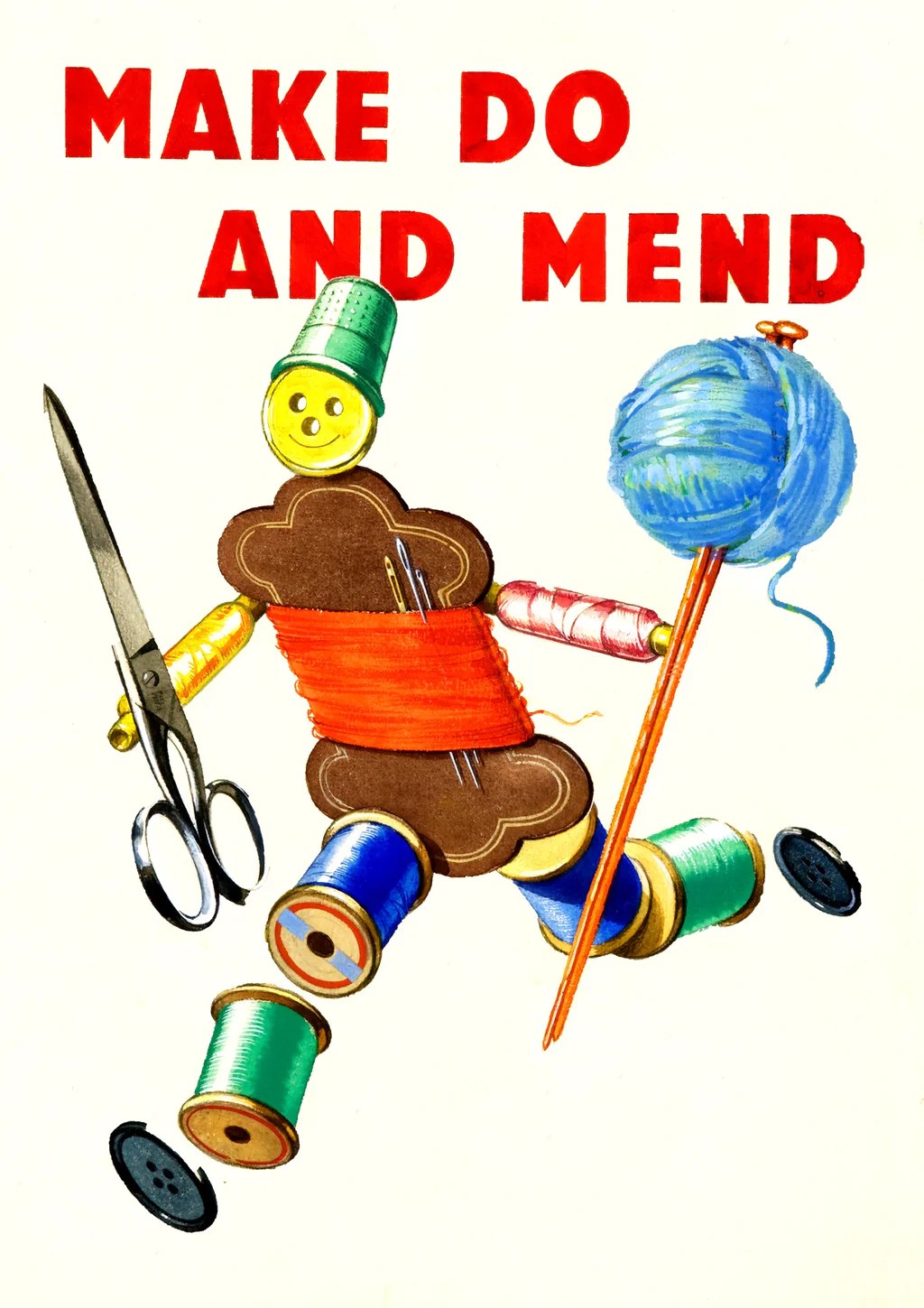
Make do and mend will be an influence for crochet trends for 2026

Colour Crochet Trends For 2026

Arranging colour palettes and playing with colourful yarn are two of the most fun aspects of being a crocheter. We express ourselves through colour, but we are also greatly influenced by the fashion world when it comes to specific colours. Remember, it’s not just blue, it’s Cerulean. Although in 2026, it’s actually Patina…

Despite the next couple of paragraphs, I am all for throwing every colour at a project and seeing what sticks. And I am pleased to see there is scope for this rainbowy view (more on that in a bit). However, let’s take a look at what others are saying. ..

Patina Blue. Etsy's colour of the year 2026. Will this be see in crochet trends for 2026?

Cloud Dancer and Patina Blue

Pantone is the obvious one for colour ideas, and there has been some surprise at 2026’s Cloud Dancer white. Hmm, I get it, it’s like a much needed reset after years of political and social instability (plus all the turmoil that goes with it). But I can’t see that changing any time soon, so, actually, is this colour choice tone deaf? Is it a kick in the face to those who are living a nightmare right now? Also, don’t they know that I’m a food spiller? It just feels a little bit like the Emperor’s New Clothes with a touch of Hunger Games.

Etsy is predicting Patina Blue as its colour of the year. So much better! I am definitely very willing to get stuck into blue. They’re pairing it with copper hues to marry a naturalistic, weathered look. This is interesting to me as this colour combo is a classic, so I don’t feel it’s very new. My bedroom walls are patina blue, and a copper lampshade hangs in the centre of the room. Ooh, am I ahead of the curve??

And how about Washed Linen as Etsy’s texture of the year!? It’s interesting to think about how this can be translated into crochet.

Also, Vogue 2026 colours include Lime Green, Emerald and now, Chartreuse. I have been waiting for the greens to push to the front for years! Plus, I’m in love with Klein Blue too – I remember learning about Klein Blue in Art History!

The Ticking Mitts are crochet wrist warmers inspired by Ticking fabric. They also happen to feature a beatiful blue shade that perfect for crochet trends for 2026
Ticking Wrist Warmers by Zeens and Roger, inspired by striped cottons and linens.

Pinterest Predictions 2026

Pinterest is a madhouse of ideas. Attention is pulled in so many directions that it’s almost impossible to focus. But despite having twenty one core trends for 2026 (across everything, not just crochet), it is possible to condense it a bit further.

It’s definitely worth looking at Pinterest’s 21 trends. They’re all aptly named and have fun boards full of evocative imagery. Across them all, you can take your pick of favourite ideas; that’s pretty much what I’ve done, and my cup runneth over. But I also cross-referenced them with the other sources and spotted patterns connecting everything. It has been such good fun, but now I have too many ideas and not enough time to bring them all to life. Oh well, it’s not the worst problem in the world.

There is literally something for everyone across the boards. I am not remotely sporty, so I’ve not looked at the “Darecations” pics properly. The thing I’ve taken from this trend, at a glance, is the appearance of light hearted, playful colour combinations, and they would translate really well in crochet. But other trends excite me more, and I wonder how they will work with crochet patterns.

The Best Pinterest Predictions. Crochet Trends for 2026.

To make it less overwhelming, it was easier to bundle multiple niches under fewer umbrellas. For example, let’s look at four: Gimme Gummy, Funhaus, Throwback Kid and Glitchy Glam. They’re all different, but they share commonalities too: Bright colours used in creative ways (funnily, this feels like the complete opposite of Etsy and Pantone). Also, bold stripes & colour blocking, asymmetry, and for us makers, relief crochet stitches. There are Venn diagram cross overs too, some coalescing, some not: vintage vibes, toys and clowns (harlequins), space age glamour,

In turn, Funhaus can partner with Opera Aesthetic and Vamp Romantic for some dark circus nightmares! Years ago, I read the Midnight Circus by Erin Morgenstern and that springs to my mind when I think of these trends paired together. Or, goodness, how about Cabaret!? If you haven’t seen Cabaret, you must! (It’s v relevant right now). Yes, to Liza Minelli, however, I am a little bit in love with Billy Porter as Emcee (from seeing pretty pics only, get me to the theatre!). Aaaanyway, in crochet, that could mean brooches and other adornments, monochrome stripes, drapey fabrics, velvetty chenile yarns, big bows, and lace work.

The latter also has its own trend for 2026: Laced Up. This one is really exciting and will have a huge influence on crochet. I’ll go into detail in a sec because by focusing on the core ideas, we can predict crochet trends for 2026.

And Even More Pinterest Ideas…

But I’m not finished with Pinterest yet. I need to mention Poetcore, which might just be my favourite. Think of Claudia in the Traitors, and you won’t go far wrong. We’re talking classic silhouettes, complete craftsmanship, and skilled construction.

I thought Poetcore could loosely fit with Khaki Coded and Neo Deco, too. In Crochet trends for 2026, these can be represented in layering pieces: neckties, wrist warmers, ribbed beanies, cosy socks and cabled sweaters. Messenger bags as well, to complete the look. Envisage classic colours, tan, khaki, navy, cream and deep greens (hello, strange cabbage trend!!), perhaps mixed with a teeny splash of complementary pastels and dirty rainbows. Plaid and Argyle patterns make a return here as well. Argh, there’s only so much stylishness I can take, I love it!

Then there’s Afrohemian Decor, which is a fusion of African styles. This is an opportunity for gorgeous textures and colour work in homewares such as rugs, cushions, bowls, and lampshades.

And I know that late 80’s / early 90’s glamour will hit big too (seen in the Glamoratti trend). I just don’t think I’m ready for it. Unless it’s to do with Diane Keaton, and then I’ll be first in line. I watched Baby Boom the other day. A big, wide belt for power dressing? The polka dot necktie? Maybe Diane can convince me.

Diane Keaton in Baby Boom. 80's and 90's fashion trends are back

The Crochet Trends For 2026 List

Ready for the list of crochet trends for 2026? These ideas are based on what I’ve chatted about so far and my own interpretation of what we might see, and in some cases, what we’re seeing already.

Lace and Filet Crochet

Such a strange one for folks who remember doilies at grandma’s house. But here we are; crochet lace and filet crochet will be big news as a trend for 2026.

As summer garments, a light cotton vest made of filet stitches is always going to be gorgeous. Or make a lace headscarf that doubles up as an accessory you can wrap around the hips. If you’re not into crochet wearables, you could definitely go down the doily route, whilst it’s fashionable (OK, I guess they’re practical, too). Or, there are some beautiful patterns for crochet tote bags, which I’m keen to try.

If you’re into home decor, filet crochet has traditionally been used for curtains to keep out the strength of the hot summer sun.

A simple yet effective way of introducing lacey features into your crochet is to introduce eyelets. Nothing more than a combination of chains and US dc (UK tr) stitches, and voila! Try it in a cowl or headscarf. Add a scallop edging too, for a touch of romantic vibes.

Fun Crochet Sweaters

Yep, I know. How about using intarsia crochet to add a bold image to the front of a crochet sweater? C2C, as well, is fabulous for creating pixellated images. It seems we might see childlike, fun images such as robots, rockets and cartoony animals.

If “drawing” pictures onto the front of sweaters isn’t your favourite thing, have fun with the yarn itself. Swap your usual yarn faves for something with extra character. Boucle and slub yarns are 80s-inspired, and I’ve seen them a lot in the past year. Look back at 80’s vintage patterns and have fun with colour blocking, or bat wings.

Cool Blue For Crochet

Ice blue is this year’s butter yellow. A sky blue bonnet, a skinny necktie, and a spring cotton tee will all be perfect for this crochet trend.

But blue isn’t everything. Strong, jewel colours are also on the cards, and I am very happy to see them. It relates to those circus, harlequin themes again. There’s a child like joy in bold, bright colours. And, wahoo, cobalt is drawing me in once again (let’s be fancy and call it Klein Blue). But it’s so good to see greens coming back as well. Bloody love green! Green with sky blue? Yes please!

cool blue. sky blue crochet colour of the year? Arochet trends for 2026.

More Mohair

I feel very strongly about mohair yarn in crochet. So much so, I’m breaking the promise I made not to talk about it more. But I wrote about it last week and looked at twenty crochet patterns that use mohair yarn. It works brilliantly with the lace and filet trend, too.

Fluffy yarn elevates crochet stitches in lots of easy ways. Simply using this yarn can change basic stitches into elegant accessories and modern crochet sweaters.

Mohair has taken its sweet time to get back as a crochet trend for 2026, but I think its moment is arriving now.

Modern Crochet Cables

There are more techniques for crochet cables than you realise. More often than not, though, crochet cables are created by the uniform positioning of post stitches. But did you know that wasn’t just the only way? There are a couple of other techniques coming up through the ranks, and they are far more “knit look” than post stitches will ever be.

Live loop cables are probably for advanced crocheters and have a much smoother effect, and they require a lot of practice to get right. A similar technique is used most often in a crochet i-cord. It’s fiddly as hell but worth it for its refined look. For more awesome game changing crochet cables, check out Adrian M and Kali’s Threads.

Crochet cables look great in mittens, sweaters, purses and long socks. They are items that will feature in key crochet trends this year. You know I’m talking about Poetcore, right?

Surface Texture in Crochet

Embroidery, buttons, and beads are being added to crochet fabrics to provide extra glam. Brooches too. Personally, it’s not a crochet trend for 2026 I’m interested in, but I know that trinketty bits are being added by lots of other crocheters. It adds personality and individuality to someone’s crochet to make it unique, so who am I to deny the fun?! It’s one of those things I say I hate, but by the end of the year, I’ll be totally in love with adding beads to crochet. Let’s see…

Interestingly, knitters are using surface crochet to embellish knitted garments, which is intriguing. Lots of buttons are featured in knitted garments at present, too. Buttons, I can do. I like buttons.

However, textural features can also be made with crochet stitches themselves. Yarns too. Therefore, it isn’t all about beads and buttons creating interest. Boucle yarns are currently a favourite of mine. The simplest crochet stitches are all that’s needed as the yarn does the talking. It brings to mind the Etsy prediction for Texture of the Year. It’d be interesting to see how crochet stitches represent a washed linen look.

Flora & Fauna Themes

With woodland whimsy, we will see more bugs, butterflies and dragonflies. Already, we’re seeing dotty animal prints in the form of deer inspired patterns. Zebra prints too (although not inspired by my local woods). Think of all the wild, outdoorsy stuff and getting back to nature, I wonder if it’s a desire for slowing down in a peaceful, dreamy way.

Here, I think it can cross into the Highland aesthetic again. There’s a little bit of the fantastic, but it’s also classic crochet, too. And that means more Claudia in her Traitors wardrobe, which is a delight. Also, Outlander, still! But just seasons 1 & 2, obvs.

Away from our animal friends, apparently, cabbage is a theme this year. Cabbage…. Although I think the focus is probably about eating it rather than wearing the leaves. However, why not build on the idea and use crochet stitches to make fabrics replicating ruffly green leaves? Add hints of purple, too.

Botanicals go beyond the cabbage, though. Florals in general are always popular, right? As with surface textures, why not appliqué crochet flowers onto a bag or sweater? Or freeform crochet flowers in a form fitting outfit? Perhaps the latter is for the more ambitious crocheter.

Wilderkind. Hopw will this pinterest trend relate to crochet trends for 2026?

Crochet Capes? The Wildcard Crochet Trend for 2026?

And the wildcard, well, I think I’m going to guess at capes. Check out Anya Taylor Joy at the Dior spring/summer 26 show. Houndstooth, no less. This is driven by poetcore, which kind of makes sense, don’t you think?

Whilst I don’t fancy recreating this exact thing in crochet. Modern crochet capes are smaller and exist to highlight your outfit, not cover it up. So far, I’ve seen little shoulder capelets in granny stitches and filet crochet. It’s that 70’s nostalgia creeping in again, but with a modern twist.

Are These Crochet Trends for 2026 Correct?

I don’t actually know if these crochet trends for 2026 are correct, but I had immense fun exploring what the possibilities might be. I particularly enjoyed finding connections and ideas that were shared amongst the themes. Yet there are contrasts too. Delicate lace sitting alongside loud stripes of colour, for example. It’s delightful and fun to have such a choice.

However, it means there is something to appeal to everyone. And if you’re a chameleon, who’s into lots of different styles, you’ll have so much fun exploring different avenues, venturing into emerald pastures new (or lime or chartreuse pastures, I guess).

Crochet is clearly shaped by outside trends, some that are seemingly unrelated to handmade crafts. But it’s also shaped by others who crochet. Our influences come from all over the place, and inspiration evolves from that, don’t you think? I’m not educated in the details of it all, but I find it totally fascinating.

So, what kind of crochet will you check out? What trends do you think express your style the most? How will you incorporate it into your crochet? Let me know!

Cheers. x

20 Crochet Patterns Using Mohair Yarn (and Other Floof)

Fuzzy Duck is a crochet pattern using mohair yarn

Crochet Patterns That Use Mohair Yarn

Over the last few years, crochet patterns using mohair yarn have been on the rise. Watching this trend come through the ranks has been a joy because I absolutely LOVE mohair yarn in crochet! When I say mohair (from the angora goat), I often just mean all the floof. So, this isn’t only restricted to mohair blended with silk; I am happy to play with all the fluffy yarn! For example, I am also partial to brushed suri alpaca.

Ten years ago, mohair yarn was very much not in fashion. The fluffy stuff was relegated to ugly eighties and early nineties statement sweaters. Well, times have changed and guess what? Fuzzy jumpers are cool! If you watched The Game of Wool recently, you’ll have seen the contestants embrace mohair yarn and design some really awesome knitted sweaters.

As well as handmade sweaters, think about scarves, hats, and balaclavas. They are all being made with fluffy yarn.

When I was really getting into using mohair yarn in my crochet designs, I wrote some top tips for using the fluffy stuff. Check out the article, here. It’s definitely worth getting to know this playful yarn.

Mohair Yarn in Crochet Patterns

Look, I know mohair yarn is not everyone’s cup of tea. I have reasons to hate it; once, when I was a little girl, I was innocently making a cake while wearing the new mohair sweater that my Nanna had knitted for me. Not protected by a pinny, the fly-away fibres got stuck in the electric whisk, entangling me in the mechanisms. It wasn’t mohair’s fault, though, so I forgave it (even if it took a while).

Anyway, I guess what I’m trying to say is that it’s a bit like Marmite; you either love it or hate it, regardless of any culinary mishaps.

For some folks, it can be an allergen, or it’s just super itchy on their skin. However, there are alternatives out there: suri alpaca, for example, is naturally hypoallergenic. And if you’re looking for something more budget friendly, brushed acrylic yarns are on the market, too. It’s the appeal of the fuzzy halo that does it for me.

So, what’s so great about mohair yarn for crochet?

Great Things About Mohair Yarn For Crochet

Let’s do a little breakdown of what’s fab about using mohair in crochet patterns.

  • It’s soft and warm – If you’re not sensitive to scratchy wools, mohair creates the softest crochet fabric. Crochet patterns using mohair are winners for this reason alone, but there are plenty more…
  • With a lovely lustre, mohair has a super glossy sheen. The frequent addition of silk helps this, too.
  • Mohair is floaty light! It’s warm but also extremely light. On its own, it’s a great summer yarn. Held with another yarn, such as merino, you’ve got yourself a beautiful crochet accessory or garment that will keep you very cosy indeed.
  • The strong fibres of mohair mean crochet projects retain their shape.
  • It’s perfect for simple crochet stitches – In fact, it’s arguably risky to create elaborate patterns in mohair. I just can’t imagine the hours of frogging if a mistake is made 13 rows down.
  • It smooths out clunkier crochet stitches – Crochet patterns can sometimes create pixelated colour blocking in variegated or hand-dyed yarns. Adding mohair calms the colour changes.
  • A little goes a long way – The laceweight nature of most mohair yarn means you get a lot of meterage for your money. This is always a good thing when it comes to yarn-eating crochet patterns.

Crochet Patterns Using Mohair Yarn (And Other Floof)

A range of fluffy yarns, great for crochet patterns using mohair yarn

So, let’s take a look at some amazing crochet patterns using mohair yarn. Many patterns call for holding mohair yarn with other fibres to add to durability and texture. However, you don’t have to. It’s a versatile fibre, and you’ll find crochet patterns that cover both options.

I’ve split the following crochet patterns that use mohair into two categories. First, we have 10 crochet accessories, such as hats, shawls and scarves. This is then followed by 10 gorgeous crochet garments using mohair yarn.

Before you scroll on, there are even more patterns to peruse in this Ravelry bundle for crochet patterns using mohair. It features the patterns below, as well as others that I couldn’t fit in this blog post.

10 Crochet Patterns Using Mohair Yarn – Accessories

Wheatfields Shawl and Wrist Warmers

The Wheatfields shawl uses an indie dyed sock-weight yarn held with a really nice mohair. Without a doubt, this crochet shawl has had more outings than any other of my crochet accessories. There was some yarn leftover, so I made matching wrist warmers!

The sock-weight yarn is from Flyy Dyed yarn, and it was exactly what I was looking for: a soft grey base with rusty speckles. I knew it’d work really well with a grey mohair yarn as the tones and speckles are gently blended together. Rachel dyes such pretty yarn; they are often OOAK dyes, so if you see a colour you love, get it while you can.

Find the Wheatfields shawl on Ravelry. Or, if you’re not a Rav user, you’ll find Wheatfields on Etsy.

Cirrus Crescent Crochet Shawl

You don’t have to hold mohair lace-weight with other yarns. In the Cirrus shawl, the mohair contrasts beautifully with alternating stripes of speckled boucle. This is gossamer light and has small, simple stitches to showcase the yarn.

This crescent shawl uses one 50g skein of mohair and one 100g skein of dk boucle yarn. I bought both from the wonderful Amy of Mamie & Florrie. The idea for this shawl came from a knitted crescent shawl also made in Amy’s yarn. The Cloudy Nora shawl is just so stunning; something similar in crochet had to be created (I asked for permission first!).

Find the Cirrus shawl on Ravelry. Or, if you’re not a Rav user, you’ll find Cirrus on Etsy.

Barking Mad Crochet Scarf

If I’m not wearing Wheatfields, I’m wearing this crochet scarf. It’s a crochet pattern using mohair yarn, but it looks great in a merino double knit, as well.

The Barking Mad scarf uses the Houndstooth stitch worked on the bias. It’s a free crochet pattern here on my blog. I love the stitch so much that I also designed a hat and a cowl.

If you wanted to buy a PDF rather than use the free Barking Mad scarf pattern, the purchasable pattern comes with the hat and cowl, too.

Find the Barking Mad on Ravelry. Or, if you’re not a Rav user, you’ll find Barking Mad on Etsy.

Isca Cowl and Headband

This cute crochet set of a cowl and a matching headband is made using Along Avec Anna yarn. Anna’s shop is just down the road from me in Exeter, but her knitwear designs are known internationally. When her yarns were introduced, I knew I had to try them, and that’s where this design originated. Isca is the Celtic word for water or river, and the Roman name for Exeter.

A combination of bobbles and crochet ribbing creates a modern crochet cowl and head-warmer set. Find Isca on Ravelry. Or, if you’re not a Rav user, you’ll find Isca on Etsy

Hygge Hugs

Hygge Hugs shawl. A crochet pattern using mohair yarn

Hygge Hugs by Susan Chin is a crochet shawl with wrist warmers. It features in Laine’s first crochet book, Let’s Crochet! (one of my designs is in it too!!).

Embracing the granny stitch, Hygge Hugs sticks to the principle of keeping it simple for crochet patterns using mohair yarn.

Here’s the Ravelry description: The stitch pattern is a fun take on the traditional granny stitch, featuring rows of double crochet shells worked on the bias. Alternating rows of different yarn weights add texture, with a touch of mohair for extra fluffiness. The shawl’s wide wingspan allows for several styling options and effortless wear. The hand-warmers use yarn left from making the shawl. They are super quick to crochet, so you will have something warm and fuzzy in no time!

Mya Shawl

Claudia wears the Mya Shawl. A crochet pattern using mohair yarn

I made a Mya shawl when it was first published in Inside Crochet magazine. It’s a beautiful design by crochet shawl queen, Helda Panagary.

Similar to the Cirrus shawl, Mya uses alternating stripes of mohair and non-mohair yarns. This time, in a deep triangle-shaped shawl using the classic linen stitch. It makes perfect use of two complementary hand-dyed yarns with dainty stitches that work really well together.

Look at the lovely Claudia from Crochet Luna (above). I really love the yarns she chose for her version of Mya. Stunning! Claudia has a lovely crochet podcast on YouTube. Go and watch it!

Hippovanten Herr

Soft and cosy mittens using mohair held with alpaca yarn? Yes please! I think I might have to make these; their simple post stitches look really soothing (and speedy) to work up.

These crochet mittens come in three different sizes, and they are made with fingering-weight yarn held with lace-weight mohair. For me, it’s always the simple crochet stitches that create the most effective and modern looking style.

Find Hippovanten Herr on Ravelry.

Clover Beanie

The Clover Beanie. Worsted weight and mohair yarn held together.

The Clover Beanie by Cosmaudi is the epitome of modern, knit look crochet. If you’d like a crochet hat that incorporates short rows to have a snug fit, this looks like a great pattern to try. Initially, it is worked flat and then seamed after. This crochet hat uses worsted-weight yarn held with mohair; the combination means it’ll work up really quickly.

Subnivean Shawl

Puff Stitch scarf. A crochet pattern using mohair yarn on its own

The Subnivean shawl by Crochet Highway is a wide scarf that uses a worsted weight mohair yarn on its own rather than two yarns held together. The thicker yarn weight makes it easier to crochet with, too. Fluffy yarn works really well with these cloud-like puff stitches, and Ana-Maria offers yarn substitutions as well, so you can try different suggestions.

The crochet shawl is an easy to remember 4-row pattern repeat using a modified Jasmine stitch. I’ve not tried this before, but I think it would be a wonderful addition to a crocheter’s wardrobe. This is such a cute crochet design.

Etela Cowl – A Crochet Pattern Using Mohair Yarn

A simple crochet cowl pattern

This is the Etela cowl by Veronika Cromwell, a free pattern on her Blue Star Crochet blog. As soon as I saw this crochet cowl, I had to learn more about it. It is still on my list of things to make as I love the use of mohair combined with a waistcoat stitch. But it’s not just any waistcoat stitch; this is a half double (UK half treble) waistcoat stitch. With such a small tweak, the look of the stitch is transformed.

This is unfussy crochet as its best; it’s so chic, and I’m totally here for it!

10 Crochet Patterns Using Mohair Yarn – Garments

Fuzzy Duck Crochet Sweater Pattern

Fuzzy Duck sweater. A crochet pattern using mohair yarn

My own design! Yay!! This is a drop sleeve crochet pattern for a roll neck sweater, or there are instructions for a crew neck. Fuzzy Duck is worked in rows despite looking like it’s corner to corner. It’s so good, I enjoyed making it four times (although one of those sweaters is made with a wool DK rather than mohair)!

Fuzzy Duck holds a sock weight yarn held with a lace weight merino. Or, you can create the fuzzy halo with just one strand of Scheepjes Stone Washed as an alternative, which is a sport-weight yarn.

Find Fuzzy Duck on Ravelry, or if you’re not a Rav user, I also sell Fuzzy Duck in my Etsy store.

Ducky Fuzz – A Crochet Sweater Vest

Ducky Fuzz crochet vest is only an indirect cousin of Fuzzy Duck. They’re both crochet patterns using fluffy yarns, and so they get matchy-matchy names. It’s purely for fun and japes because that kind of puerility makes me laugh.

The original, seagreen top is suri alpaca on its own. The striped version uses Stylecraft Grace, which is an aran-weight floof yarn that’s 85% acrylic, 5% wool and 10% mohair. It gives it a pretty halo, and in my experience is a little bit easier to frog if things go wrong.

If the fluffy yarn is too much for crochet ribbing and you’re a confident knitter, try a 1×1 knitted rib. Only crochet ribbing is included in the pattern, but the knitted edging is very simple to whip up without instructions (honestly, if I can do it…)

Find Ducky Fuzz on Ravelry here, or if you’re not a Rav user, find Ducky Fuzz on Etsy.

Sia Cardigan

The Sia Cardigan -  a great first garment if you want to try a crochet pattern using mohair yarn.

The Sia cardigan by Showroom Crochet is a subtle approach to using mohair yarn; it’s modern, understated and proper wearable crochet. This would be a great first cardigan if you want to try a crochet pattern using mohair yarn.

Step-by-step guides and video tutorials will help crafters make this crochet cardigan. It’s definitely on my list of crochet garments to make, and I think it’d tempt me into buying Knitting for Olive yarn too!

Be Bold Sweater

I remember noticing the Be Bold sweater in an issue of Inside Crochet magazine. It was seven years ago, yet I still recall thinking how cool it was. It’s bold and wants to be seen, isn’t it fab? It’s a crochet design by Michelle White of Dora Does.

This is a crochet design that uses mohair lace weight yarn on its own, again, sticking to simple stitches. I think that’s the theme throughout this collection! Let the fluffy yarn do the talking; don’t try to outdo it with fancy stitch patterns.

I have loads of saved images of mohair jumpers designed by Vivienne Westwood from the late 70’s. Michelle’s design reminds me of a modern take on that punk era, perhaps a bit more grown up!

Something Something Raglan

Red Something Something raglan. Acrochet pattern using mohair yarn

This bright red sweater is the Something Something Raglan by Moa Blomqvist. It’s a crochet pattern using mohair yarn on its own and has negative ease to create a fitted crochet garment. It’s worked top down, in the round, with additional customisable options for tweaking so you can make the perfect garment to fit your shape.

A smaller hook size means the stitches sit closer together. This creates a warm yet light crochet fabric.

Crocheted Kore – A Crochet Pattern With Mohair Yarn

using mohair yarn to embelish a simple crochet top

This is the Kore sweater by Maysa Tomikawa. It’s a genius idea; adding vertical mohair ruffles to a plain, oversized, cotton crochet top. It’s both simplistic and uber creative, I ruddy love it! It looks sophisticated, yet I know it’d be very speedy to work up. It is also a great crochet project if you’re cautious about using mohair for garments. I believe the mohair ruffles are added after the main body is worked up, so, in the unlikely event you go a little bit wrong, you haven’t messed up the entire thing! Wahoo!

You’ll find many of Maysa’s crochet designs also have knitted versions of the same design, showing the absolute versatility of yarn crafts.

I’ll Pencil You In Sweater

I'll Pencil you in is a crochet pattern using mohair yarn

I’ll Pencil You In is a crochet sweater that’s worked vertically, meaning rows are worked up and down. It’s very much on trend with its knit look crochet stitches.

This crochet design is by Lindsey Muscarell, aka Just the Worsted. Using worsted-weight, held with mohair, this is a sweater that can be crocheted in next to no time at all.

Epeire by Emmeline Bonhomme

Use simple crochet stitches when looking for a crochet pattern using mohair yarn

Epeire is a loose-fit, raglan sweater and another top that uses mohair on its own. It’s a pattern written in French, but including it is a must because it’s totally gorgeous. I’m sure it could easily be translated into English if French isn’t in your repertoire.

Similar to the Something Something Raglan, this is a raglan sleeve construction, worked from the top down. Yet, look at how different it is. There’s lots of positive ease in this one, making it laid back and really casual. It makes a fabulous layering piece, and the loose, open stitches have a rebellious vibe.

The vivid green? Eek, I want one! I have convinced myself that I could hook up Epeire in a weekend, but perhaps that’s slightly ambitious…

Rousseau

Rousseau, a beautiful crochet pattern using mohair yarn

This light, lacey top is called Rousseau, and it’s designed by Eline Alcocer. It is a very pretty crochet pattern using mohair yarn, which features in the latest crochet collection by Daruma.

The stitch pattern on Rousseau is slightly more complex than other patterns featured here. However, for experienced and/or ambitious crocheters, this is completely achievable. Not everything should be easy all the time. This is a great pattern to push your crochet skills. It’s more challenging than the other patterns here, but I do reckon the results would be 100% worth it.

Starlight Couple Cardigan

Modern crochet clothes. This design is a crochet pattern using mohair yarn

The Starlight Couple Cardigan is such a cool pattern. It’s designed by Susan’s Family, and it’s a free pattern that comes with a shedload of crochet charts to make it easier to follow. Plus, there’s a YouTube tutorial, which is a great visual aid to accompany the pattern.

This crochet cardigan is maybe the most challenging make in this list, which is why I’ve saved it until last! However, with sections of varying crochet stitches, each section is small, so easier to take one step at a time.

The shirt-like look of this top is very on trend, so I think it’s worth a go if you’re after a more advanced crochet project.

Will You Crochet with Mohair?

And there you have it, a collection of 20 designs for crochet patterns using mohair yarn! Is this something you have explored before?

I’m not going to deny that mohair is without challenges; sometimes, it’s tricky stuff to work with. If you haven’t worked with mohair yarn before, you may wish to aim for one of the easier crochet accessories to see how you go. Then you’ll be ready to embark on a crochet sweater! After a short time, it becomes much less difficult to work with two yarns together, and it is easier still when choosing the right pattern for the material.

So, what do you think of the collection of crochet patterns using mohair yarn? Which ones do you like the best? Have you got any other crochet patterns that I’ve missed? Let me know in the comments. Thank you and happy crocheting!

Cheers! xx

Chunky Crochet Mittens

How to crochet chunky mittens

How To Crochet Chunky Mittens

Crochet mittens are a winter favourite of mine, and that includes super warm, chunky crochet mittens! Ordinarily, I prefer a lighter weight of yarn for handmade accessories, but for quick-fix crochet, this pattern is great.

These crochet chunky mittens are worked from the cuff up to the tips of the fingers. After a post-stitch ribbing, simple increases are made to incorporate space for a thumb. Then, the rest of the mitten is shaped with a couple of decreases. Because bulky weight yarn is used, they work up super fast, so they make ideal crochet gifts too.

In addition to the written crochet pattern below, I have also created a crochet tutorial on how to crochet mittens; check it out. Alternatively, you can also purchase a written PDF pattern that’s ad-free. It comes with both US and UK instructions. This super pattern is available on Ravelry or you can also buy the crochet pattern in my Etsy store.

Chunky (or Bulky) Yarn for Crochet Mittens

Chunky yarn and bulky yarn are the same weight of yarn. I believe that’s a size 5 (although I don’t use yarn sizes, so had to look it up!). It turns out that a chunky, or bulky yarn makes a great pair of mittens when using simple crochet stitches.

Of course, I tried a few different yarn brands and after a bit of research, my two favourite chunky yarns were West Yorkshire Spinners Re:Treat and Stylecraft Carnival Tweed. Also, it turns out, you can make one pair of chunky crochet mittens out of a single, 100-gram ball of yarn, which is just amazing!

Take a look at the video tutorial for how to crochet chunky mittens to see the leftovers from each 100 gram ball.

colour changing yarn for chunky crochet mittens

Things You Need To Crochet Chunky Mittens

  • West Yorkshire Spinners Re:Treat, Chunky Roving, 100% Bluefaced Kerry Hill (100g/ 140m/ 153yds) x1 ball.
  • Or, Stylecraft Carnival Tweed, Chunky, 30% Wool, 70% Acrylic (100g/145m/158 yds) x1 ball.
  • 5mm hook (US H /8) for the cuff.
  • 5.5mm hook (US I/9) for the mitten main sections. Please remember to change to the 5.5mm crochet hook once you have completed the cuff. I totally forgot when I filmed the tutorial and, when it dawns on me (after I’ve crocheted most of the mitten!), I show you at the end what difference it makes.

Crochet Stitch Abbreviations – US Terms

beg = beginning, bpdc = back post double, ch = chain, ch-sp = chain space, dec = decrease, fpdc = front post double, hdc = half double crochet, st(s) = stitch(es), sp(s) = space(s), sl st = slip stitch, rep = repeat, yrh = yarn round hook.

Stitch Tension

Tension isn’t necessarily essential but it could affect the fit of your mittens. And it could also affect the amount used. Basically, if stitches are too loose, it doesn’t matter, but it will mean you need more than one ball of yarn.

If you’re a stickler for gauge (and I am very much in support of meaasuring gauge), 8cm measures 11 stitches & 8 rows. I chose 8cm as a measurement because I could measure across the widest part of the mitten to check it. If it was the standard 10, I would have had to make a gauge swatch and honestly, I wasn’t up for that for crochet mittens!

Finished Mitten Size

The wrist circumference is 19cm / 7.5in. The mitten length is 24cm / 9.5 in. This means that the mitten will fit the average woman’s hand very nicely indeed. Comparatively, I think I have a pretty average hand size.

Adjusting a Crochet Mitten to Fit

If you wanted to adjust these chunky crochet mittens to make them a different size, it’s definitely possible. There are a couple of different places you could add or take away stitches and rows. So, here are three ways to make potential adjustments.

  • To adjust the circumference, the stitch pattern is a multiple of two to accommodate the 1×1 post stitch ribbing. Therefore, take or add two stitches to the foundation round at the beginning. Surprisingly, just two stitches measure approximately 1.5cm! So bear that in mind.
  • Each round of hdc stitches is 1cm in height. There are two places where you could add extra rows to make longer mittens, or indeed, take the away for shorter mittens. You might want to remove the first round on hdc (UK htr) stitches after the cuff. Then remove a further round after the thumb split. Or add them if you want larger/longer chunky crochet mittens.
  • If you had exceptionally slender thumbs, you could, perhaps, lose a stitch either by dropping the final increase on round 12 and skipping 7 titches rather than 8 for the thumb split. But I wouldn’t advise on reducing them too drastically. An extra stitch can be incorporated by adding one more increase on round 12 if you wanted larger thumbs. If you do this, skip 9 stitches at the split, not 8.
  • You could also make cosy crochet wrist warmers by not working the thumb and finishing after 5 or six round after the split!
Putting on my red Crochet chunky mittens

Notes For Chunky Crochet Mittens

  • As nearly always, the 1ch at the beginning of rounds is not counted as a st.
  • When changing colour, cut the old yarn and pull through the new yarn on the last yarn over of the previous round before slip stitching to join the round.
  • For Round 1, close up the open start by popping in a few firm stitches to sew closed, it’s OK to leave this until the end.
  • If in doubt check out the video tutorial. It has timestamps for the main sections.
  • I know this is obvious, but make two mittens to get your pair!

Special Stitches

Foundation double (fdc).
This is an alternative to beginning with a foundation chain. It creates a neater edge that’s less likely to be tighter than the rest of your stitches.

Ch4 (counts as a st), yrh, insert hook in 4th ch from hook, yrh, draw through, yrh, draw through 1 loop (this creates the space you’ll work the next stitch into), yrh, draw through 2 loops, yrh, draw through 2 loops. Work the next fdc (foundation double) into the created space and loop behind it.  

Decreases (dec).
Yrh and insert hook into st, yrh and pull up a loop (3 loops on hook), insert hook into next st, yrh and pull up a loop, yrh, pull through all 4 loops on hook.

Chunky Crochet Mittens Pattern

Main Hand Section

Rnd 1 (r/s): With 5mm hook, 26fdc, join with sl st, turn. [26 sts]
Rnd 2 – 5: 1ch, *1fpdc, 1bpdc; rep from * around, join with sl st, do not turn (here & throughout).
Rnds 6 – 7: Change to 5.5mm hook, 1ch, hdc around.
Rnd 8: 1ch, starting in the first st [1hdc, 2hdc in next st] twice, hdc to last st, 2hdc in last st, join with sl st to first st, turn [29 sts]
Rnd 9: As Rnd 6
Rnd 10: As Rnd 8. [32 sts]
Rnd 11: As Rnd 6.
Rnd 12: 1ch, 1hdc, 2hdc in next st, hdc around, join with sl st to first st, fasten off. [33 sts]. 

Separate for Hand and Thumb

With loop on the hook, insert hook into first st, skip 8 sts, insert hook into back of next st, sl st through both sts, turn work to continue working on hand.

Rnd 1: 1hdc in same stitch as sl st just made, hdc around, join with a sl st to the first st. [25 sts]
Rnds 2 – 5: 1ch, hdc around, join with sl st.
Rnd 6: 1ch, 1hdc, 1dec, hdc around, join with sl st. [24 sts]
Rnd 7: As Rnd 2.
Rnd 8: 1ch, 1hdc, 1dec, 8 hdc, 1dec, hdc to end, join with sl st, turn. [22sts]
Rnd 9: As Rnd 2
Rnd 10: 1ch, 1hdc, 1dec, 7hdc, 1dec, hdc to end, join with sl st, turn.  [20 sts]
Rnd 11: As Rnd 10.  [18 sts]
Fasten off, leaving a tail. 

Crocheting the Thumb

Rnd 1: Join yarn to any st, 1ch, hdc around, join with a sl st to first st, turn. [8 sts]
Rnd 2: 1ch, hdc around, join with sl st to the first st, turn.
Rnd 3: 1ch, 1hdc, 1dec, hdc around, join with sl st to the first st, turn. [7 sts]
Rnds 4 & 5: As Rnd 2.
Fasten off, leaving a tail. 

With the right side out, use a darning needle to weave the tail through each front loop of the top of the mitten. Gently pull to close. Sew in the end to secure. Rep for thumb.
Sew in all other ends.

Three pairs of chunky crochet mittens

And there you have it! Really easy crochet mittens using bulky yarn, my chunky crochet mittens! What do you think? How quickly do you think you’d be able to make a pair? I bet you could do it in a day without a hitch! Let me know!

If you enjoyed this free crochet pattern, please feel free to peruse the rest of my blog. I have some other fabulous free crochet patterns, or I have a page that gathers some excellent resources for crochet tips and tricks. You’ll find some brand new crochet ideas to add to your repertoire!

But for now, thank you for stopping by and I’ll be back soon. Cheers! x

Hinterland Crochet Shawl

Hinterland is an aran weight crochet shawl pattern.

Hinterland is an aran weight crochet shawl pattern that I designed back in 2018. It was a crochet design commissioned for Mollie Makes magazine, which is sadly no longer published (oh, how I loved Mollie Makes!).

In the magazine, the shawl was called Nordic Noir. I wasn’t keen on that title, so I changed the name when I published it independently. Hinterland, as a name, feels a little bit less moody.

For the first time, I’m offering it as a free crochet pattern, but you can still buy a print-friendly version on Ravelry (where I have lots of other crochet patterns). You can buy Hinterland in my Etsy store too.

Use your worsted weight yarn to crochet a shawl

Making the Hinterland Crochet Shawl

If you would like the free version of Hinterland, my aran-weight crochet shawl, please keep reading. I’ll throw in a few “How to” pictures as well, as I think that’s helpful. A chart and table of stitch counts are also included in the PDF version pattern for purchase.

To make your aran weight crochet shawl, you will need (funnily enough) some aran weight yarn. I have crocheted this shawl three times, and each time I have successfully used a different yarn brand. It’s a very versatile shawl. Sadly, I don’t remember the other brands, but that’s Ok as I don’t have many pics of them anyway. Just use your fave aran or worsted weight yarn and you won’t go far wrong.

However, a perfectly fine yarn to use, and the yarn I used in the original Hinterland shawl, is King Cole Fashion Aran. Unfortunately, it looks like the Shetland shade isn’t available anymore, but don’t worry, the range is pretty wide. I’m sure you can choose lots of colourful alternatives to make a beautiful crochet shawl. Just writing up this blog post makes me want to crochet a new version in totally different colours!

This aran weight crochet shawl pattern is super easy, and therefore, I would say that it’s suitable for beginners.

The finished size is approximately. It’s a big, warm hug of a shawl at 220 x 88 cm / 86.5 x 34.5 inches.

Hinterland, an aran weight crochet shawl pattern

Free Crochet Shawl Pattern Using Aran Weight Yarn

Hinterland’s Yarn and Hook Sizes.

As has been the case for my last few free crochet patterns, I’ve made the decision to write the freebie up in US terms. I didn’t always do this, but because many of my customers prefer US terms, it makes sense to move forward with this from now on. The paid-for version has both UK and US crochet terms.

King Cole Fashion Aran is 30% and 70% acrylic with 200m per 100g. You will need 300g (3x100g balls) of the main colour (YA) and 200g (2x100g balls) of the edging colour (YB).

For the main body of the shawl, you will need a 5.0 mm (UK 6, US H/8)  crochet hook. For the edging, change to a 5.5mm (US I) crochet hook. There is a slight difference in tension for the different crochet stitches, so to balance that, the different hook sizes are used. There’s nothing to stop you from using a different size of hook to find one that best suits your crochet style.

Ready to crochet?

Aran Weight Crochet Shawl Pattern

With YA and 5mm hook, chain 4
Row 1: (1dc, ch2, 2dc) in 4th ch from hook, turn. [2 sts per side, not inc 2 centre chains]
Row 2: Ch3, 1dc in same st, 2dc in next st, (1dc, 2ch, 1dc) in 2ch-sp, 2dc in next st, 2dc in top of 4th ch, turn. [5 sts per side & increasing by 3 sts each row]
Row 3: Ch3, 1dc in same st, 2dc in next st, 1dc along to center, (1dc, 2ch, 1dc) in 2ch-sp, 1dc along to last 2 sts, 2dc in next st, 2dc in top of 3rd ch, turn.

Row 4 – 7: Rep Row 3
Row 8: Ch4 (counts as 1dc and ch1, here & throughout), [1dc in next st, ch1] twice, skip next st, *1dc, ch1, skip 1 st; rep from * to center, (1dc, 2ch,1dc) in 2ch-sp, ch1, **skip 1 st, 1dc, ch1; rep from** to last 2 sts, 1dc in next st, ch1, 1dc in top of 3rd ch, turn. [12dc & 11ch sts / 23sts]
Row 9: Ch3, 1dc in same st, 2dc in 1st ch-sp, 1dc in next st, *1dc in ch-sp, 1dc in next st; rep from * to center, (1dc, 2ch, 1dc) in 2ch-sp, **1dc in next st, 1dc in ch-sp; rep from ** to last 2 sts, 2dc in last ch-sp, 2dc in top of 3rd ch, turn. [26 st per side]

Making Hinterland; an aran weight crochet shawl pattern

Row 10 – 15: Rep Row 3
Row 16: Rep Row 8
Row 17: Rep Row 9
Row 18 – 19: Rep Row 3
Row 20: Rep Row 8
Row 21: Rep Row 9
Row 22 – 27: Rep Row 3
Row 28: Rep Row 8
Row 29: Rep Row 9
Row 30 – 31: Rep Row 3
Row 32: Rep Row 8
Row 33: Rep Row 9
Row 34 – 39: Rep Row 3
Row 40: Rep Row 8
Row 41: Rep Row 9 [122 sts per side]

Crochet Linen Stitch Edging

Change to a 5.5 mm hook.
Row 42: Ch4, 1sc in same st, ch1, skip 1 st, *1sc, ch1, skip 1 st; rep from * to center, (1sc, 2ch, 1sc) in 2ch-sp, ch1, skip 1st, rep from * to end, finishing with (1sc, 1ch, 1dc) in top of 3rd ch, change colour to YB on last st, turn. [1dc, 62sc, 62ch / 125 sts & increasing by 3 sts per side, each row]

The dging on Hinterland; an aran weight crochet shawl pattern


Row 43: Ch4, 1sc in first sp, ch1, skip 1 st, *1sc in 1ch-sp, ch1, skip 1 st; rep from * to center, (1sc, 2ch, 1sc) in 2ch-sp, ch1, skip 1 st, rep from * to end finishing with (1sc, 1ch, 1dc) in last sp, turn.
Row 44 – 62: Rep Row 43
Row 63: Ch1 (does not count as a st), (1sc, 2ch, 1sc) in first ch-sp, 1sl st in next ch-sp, *(1sc, 2ch, 1sc) in next ch-sp, sl st in next); rep from * to center, (2sc, 2ch, 2sc) in 2ch-sp, **1sl st in next ch-sp, (1sc, 2ch, 1sc) in next; rep from ** to end.
Fasten off and sew in ends.

pinning out a crochet shawl to block

Blocking A Crochet Shawl

As luck would have it, I have a blog post all about blocking crochet projects. Feel free to check it out because it has lots of useful info. However, for this aran weight crochet shawl, I used a yarn that has a blend of wool and acrylic. Due to the acrylic content, I chose to steam block the Hinterland shawl. Be super careful when you do this because steam is HOT, and you do not want to melt all of your hard work.

To open up the stitches and give this shawl a beautiful drape, blocking is essential. Pin out onto foam blocking mats (or use a towel on the carpet). Take lots of care to steam block by holding an iron (with a steam function) an inch above the work. This is just so important, DO NOT let the iron touch the yarn; it will melt/burn acrylic yarn.
Leave to dry.

However, I thoroughly recommend getting a steamer; honestly, it totally takes away the fear of melting.

Steam blocking an aran weight crochet shawl

Making Tassels for your Crochet Shawl

Make three tassels; you want one for each point of your triangle shawl. If the following instructions don’t make sense, I have a How To Make Tassels video tutorial.

Wrap Yarn B around the width of a sturdy A5 book approximately 20 times. 
With a 30 cm piece of yarn, tie the lengths together in the middle, then cut the other ends. Fold the strands in half with the tie at the top so that you have a mini bundle of yarn. 
2cm down from the tied middle, tie another 30cm length of yarn around the lengths (you can wrap this around a couple of times) and let them hang with the other threads. 
Trim the tassel ends and tie them to the corners of the shawl for a nice finishing touch. Sew in the ends. 

Aran weight crochet shawl pattern called Hinterland

And voila! That’s how you make an aran weight crochet shawl. If you like this crochet pattern and would like to try some of my other designs, the best way to do that is to have a read through this blog! The first place to visit is my Free Crochet Pattern page. Let me know what you think because I would love to hear from you! 🙂

Gingham Crochet Bow Pattern

Crochet Gingham Bows

This gingham crochet bow pattern only uses small amounts of yarn scraps, so it’s perfect for a stash-busting project. Little bows, whether gingham, checked, plain, large or small, they’re a super speedy crochet project. In this blog post, you’ll find patterns for both the large and small sizes.

Both crochet bow patterns are also very easy to adapt. Why not add more rows for a deeper, plusher bow? No one says you have to go gingham, so make them all in one colour, or edge them in contrast colours. What about crocheting a giant bow in super chunky yarn? Play around with these crochet bows and have fun because it’s the sort of crochet pattern where you can’t stop at just one!

You could even crochet some tie sections in gingham (or plain colours), too! I didn’t do this as I’ve only just thought of it (8 years after first designing the crochet bows!), but I think that would look really cute. Instead, I hastily crocheted short chains of about 15-18 chains for the little bows, which can be easily stitched to the back to look like ties. See the next photo to have a visual of the chains. I pulled the knots tight so they don’t come undone, but you may want to sew the ends in to secure.

A crochet bow pattern using fluffy yarn.

Below are the written patterns, but I’ve also put together a video tutorial for the gingham crochet bow pattern. I demonstrate how to make both the small and large bows in the gingham pattern, which uses a basic tapestry crochet technique.

Gingham Crochet Bow pattern

It’s a pattern I designed for Inside Crochet magazine back in 2017, but I have a feeling crochet bows are on their way back into fashion, so it’s the perfect time to revisit this easy pattern.

Gingham Crochet Bow Pattern

The instructions here are in US terms, but if you would like to buy an ad-free version of the crochet bow pattern on Ravelry, the PDF download comes in both UK and US terms. I also sell crochet patterns in my Etsy shop 🙂

The approximate sizes are: Large bow 5 x 12cm /1¼ x 2¼ inches. Small bow 3 x 6cm / 2x 4¾ inches. But don’t let that stop you from experimenting and making them in different yarn weights to come up with different-sized crochet bows. I used a super chunky yarn and a 6 or 7 mm hook ( I can’t remember now) to make a giant bow. I have no idea what to do with it, but it was fun to make! [Edit:: just in the last few minutes, one of the kids has taken ownership of it!]

Two coloured crochet bow in check pattern

Materials for Crochet Bow Pattern

I use DK cotton in the main pattern because it’s sturdy and creates a nice, firm bow. You don’t need very much yarn at all. Below, I’ve said 20 grams, which is generous. So you probably won’t need that much. We’re talking fewer than 50 metres of each colour. This should make one large and two small crochet bows

  • 20 grams Drops Muskat DK (100% cotton, 50g/100m/109yds), in Denim (Yarn A), 15 grams each of Rico Cotton Essentials DK (100% cotton, 50g/130m/142yds) in Navy (Yarn B) & Natural (Yarn C). 
  • 3mm hook.
  • Needle for sewing in ends.
  • Headband and 2x 5cm hair clips – Suggested because I added the crochet bows to hair accessories.
  • Hot glue gun (or other strong glue) – optional.

You’ll be using US single crochet stitches for this crochet bow pattern. That’s UK double crochets. There’s also the option of finishing off with a slip stitch edging to make them a little bit tidier. That, and chaining, are all the techniques you need to know.

Crochet Bow Pattern Notes

  • Colour changes: Yarn is changed during the third stitch of the current colour. Ie, insert hook in stitch, yarn over and pull through stitch, drop current yarn and finish stitch by yarning over and pulling through the new yarn to complete. 
  • The yarn not in use is crocheted over as you go, ready to pick up when you need it.
  • Watch the video tutorial here to see the process of using tapestry crochet.
  • Buy the pattern here, or keep reading for the free version.

Large Gingham Bow Main Piece

With Yarn A chain 64.
Row 1: 1sc in second ch from hook, 1sc in next 2 sts, *change colour to Yarn B, 1sc in next 3 sts, change colour to Yarn A, 1sc in next 3 sts; rep from * to the end, turn. – 63 sts.
2: 1ch, 1sc in next 3 sts, *change colour to Yarn B, 1sc in next 3 sts, change colour to Yarn A, 1sc in next 3 sts; rep from * to the end, change colour to Yarn C on the last st, turn.
3: 1ch, 1sc in next 3 sts, *change colour to Yarn A, 1sc in next 3 sts, change colour to Yarn C, 1sc in next 3 sts; rep from * to the end, turn.
4: 1ch, 1sc in next 3 sts, *change colour to Yarn A, 1sc in next 3 sts, change colour to Yarn C, 1sc in next 3 sts; rep from * to the end, change colour to Yarn A on the last st, turn.
5: 1ch, 1sc in next 3 sts, *change colour to Yarn B, 1sc in next 3 sts, change colour to Yarn A, 1sc in next 3 sts; rep from * to the end, turn.
6: As Row 2.
7: As Row 3.
8: As Row 4.
9: As Row 5.
10: As Row 2.
11: 1ch, sc to end. Cut yarn, leaving an end for joining. Sew in the other ends and fold the piece in half (neatest side inside) end to end.  Join ends together using sc stitches or sewing. Fasten off and sew in the last end. Turn right side out.

Large Gingham Bow Middle Band

With Yarn A chain 19.
Row 1: 1sc in second ch from hook, 1sc in next 2 sts, *change colour to Yarn B, 1sc in next 3 sts, change colour to Yarn A, 1sc in next 3 sts; rep from * twice, change colour to Yarn B, 1sc in next 3 sts, turn. – 18 sts.
2: 1ch, 1sc in next 3 sts, *change colour to Yarn A, 1sc in next 3 sts, change colour to Yarn B, 1sc in next 3 sts; rep from * twice, change colour to Yarn A, 1sc in next 3 sts, change colour to Yarn C on the last st, turn.
3: 1ch,1sc in next 3 st, *change colour to Yarn A, 1sc in next 3 st, change colour to Yarn C, 1sc in next 3 st; rep from * twice, change colour to Yarn A, 1sc in next 3 st, turn.
4: 1ch, 1sc in next 3 sts, *change colour to Yarn C, 1sc in next 3 sts, change colour to Yarn A, 1sc in next 3 sts; rep from * twice, change colour to Yarn C, 1sc in next 3 sts, change colour to Yarn A on the last st, turn.
5: 1ch, 1sc in next 3 sts, *change colour to Yarn B, 1sc in next 3 sts, change colour to Yarn A, 1sc in next 3 sts; rep from * twice, change colour to Yarn B, 1sc in next 3 sts, turn.
6: Rep Row 2, ending without the last colour change. Fasten off and leave a tail for sewing. Sew in all the other ends.

Large Plain Crochet Bow

Chain 59.
Row 1: 1sc in second ch from hook, sc to end, turn. – 58 sts.
2: 1ch, sc to end, turn.
Rows 3 – 14: As Row 2.
15: Join contrast yarn, slip stitch along to end. Fasten off and sew in the ends.
Rep slip stitch edging on the right side of Row 1.

Make a middle band in one colour (as instructed above for stitch count and rows). Add contrast slip-stitch edging to the first and last rows of the middle band. 

Assembly For Large Bows

With the joining seam in the centre of the back, pinch the middle of the main piece to make a bow shape.  Hold against the headband (if using) and wrap the middle band around all. Sew the ends of the middle band together to secure it all in place. You can also use glue to secure the bow to the hairband or any other surface you wish to attach it to.

Small Gingham Bow

With Yarn A chain 16. 
Repeat rows 1-6 of main piece. – 15 sts.
Fasten off and sew in ends.

Assembly For Small Bow

Using 80cm of Yarn B, tightly tie a knot around the centre of the bow, leaving a 10 cm tail. Wrap the yarn tightly 12-14 times around the centre. Tie a knot at the back of the bow and sew in ends, then with a hot glue gun (or equivalent), stick the bow to the hair clip. Alternatively, sew the bow to the clip. Repeat with the other small bow.

And that’s it! Pretty simple, hey? If you liked this crochet bow pattern, then please feel free to check out my free crochet pattern page to find more fun projects. Cheers! x

Easy Crochet Granny Triangle Shawl

How to crochet a granny triangle shawl

How To Crochet A Granny Shawl

With the rise in popularity of using leftover scrap yarn, I thought it was the perfect time to revisit an old classic: the granny triangle shawl! You can’t go wrong with granny stripes worked into a crochet shawl pattern, so gather all your yarn leftovers; it’s time to work up a fabulous stash buster.

I designed my first crochet granny triangle shawl way back in 2016. I was relatively new to the world of crochet blogging and desperately wanted to put together a step-by-step photo tutorial. For 2025, I have made a few tweaks to make this granny triangle shawl even easier. Although, honestly, the old version isn’t hard at all.

I have tidied the edging of this new (very simple) crochet shawl, and that is the only change. Well, the yarns and colours here are a proper stash-busting scenario, whereas my original version had planned colour placement.

If you would prefer, you can buy an ad-free version of this pattern from Ravelry, complete with a helpful chart to show stitch placement. Or, check out YouTube for the video tutorial of this granny triangle shawl.

Granny stripe crochet shawl pattern

What You Need to Crochet a Granny Triangle Shawl

You could crochet your granny shawl in 4 ply, DK, or worsted, to name three different yarn weights. You could use the same colour of yarn throughout, or even self-striping yarn if you want to avoid sewing in all the ends.

This particular shawl measures 68.5 x 145 cm (27 X 57 inches) and uses approximately 225 grams of 4 ply/fingering/sock weight yarn. That’s roughly 1,012 yards/ just under 1,000 meters. For row 55, it’s about 10grams (40 – 45 metres), therefore, this would also be a great crochet pattern for using mini skeins.

Of course, you can make your shawl bigger or smaller. If you want a variation of the pattern, such as using a different yarn weight, the quantities and measurements will probably change. I really don’t think it matters too much for this crochet pattern. A granny triangle shawl can be made in whatever weight of yarn you like, with whatever hook size you like.

As I used 4 ply, I chose a 3.5mm crochet hook, which creates a pretty standard tension, so that there is a nice drape to the shawl.

Whether you’re using yarn stash in your favourite weight of yarn, or going to use all one colour from a special collection, it will likely work for this easy crochet project. But a granny triangle shawl does make the perfect stash busting crochet project, so let’s talk about that a bit more…

Colourful stashbusting crochet ideas. An easy granny stripe shawl pattern

The Ultimate Yarn Stashbuster!!

Projects where you can just grab all your yarn leftovers are the best! We’re all a bit skint at the moment, but it doesn’t mean we have to go without. Making sure yarn scraps are used and loved in a new crochet project is perfect. Creating something special from not very much at all? We can achieve that in crochet!

There’s nothing to stop you changing colour halfway through a row, either. Use up every last bit!

You don’t have to use 4ply yarn, you can use whatever you have in your yarn stash. In fact, my original granny triangle shawl is DK (double knitting) weight yarn.

If changing to a different yarn weight, all you need to do is change the hook size you use to create the drape and tension that you like best. You could even mix up your yarn weights for something, perhaps a bit more bonkers, but at least it’ll be truly unique.

The beauty of stashbusting yarn leftovers is that you can create crazy colour palettes in yarn you wouldn’t ordinarily plan. It can seem scary to throw all the colours in one project, but if you’re willing to go with the flow, you could end up with your new favourite crochet accessory!

Granny Triangle Shawl Pattern

If you’d prefer to have an ad-free version of this pattern (US & UK terms available), it is available in my Ravelry store to purchase. Or, if Rav isn’t your thing, find the pattern in my Etsy shop.

The following pattern is written in US terms. (Having explored the type of instructions I share on the blog, I’m now leaning towards US instructions as they seem to be preferred by most readers. I’m happy to share both UK & US instructions, which I have done in the past, but I’d rather not confuse things. Let me know your thoughts! Thanks!!).

Materials to Crochet a Granny Triangle Shawl

As discussed in more detail above, you need approximately 225 grams of 4ply yarn and 3.5mm crochet hook. Feel free to use any yarn you like, mix it up, go wild!

Abbreviations (US Crochet terms)

beg = beginning, BLO = back loop only, ch = chain, ch-sp = chain space, clu = cluster (3dc in same sp),
dc = double crochet, PM = place marker,  R/S = right side, sc = single crochet, st(s) = stitch(es), sp(s) = space(s),
sl st = slip stitch, rep = repeat, yrh = yarn round hook.

Crochet Granny Triangle Shawl

Note that you can purchase the PDF pattern for a small cost, or watch the video tutorial for free! Check out How to Crochet a Granny Triangle Shawl

Make a magic ring or ch4 and join with a sl st.

Row 1: Ch4 (counts as 1dc & 1ch), working into ring, 3dc, ch2, 3dc, ch1, 1dc, turn. – [1 st & 1 clu per side]
Row 2: Ch4, 3dc in first ch-sp, (3dc, ch2, 3dc) in next 2ch-sp, (3dc, ch1, 1dc) in last ch-sp, ch col, turn. – 1 st & 2 clu per side]
Row 3: Ch4, 3dc in first ch-sp, 3dc in next sp between clu, (3dc, ch2, 3dc) in 2ch-sp, 3dc in next sp, (3dc, ch1, 1dc) in last ch-sp, ch col, turn. – 1 st & 3 clu per side, increasing by 1 clu each row]
Rows 4 – 55: Ch4, 3dc in first ch-sp, *3dc in next sp; rep from * to centre 2ch-sp, (3dc, ch2, 3dc) in next 2ch-sp, *3dc in next sp; rep from * to last ch-sp,  (3dc, ch1, 1dc) in last ch-sp, ch col, turn. – 1 st & 55 clu per side]

easy crochet granny triangle shawl

Easy Crochet Scallop Edging

To achieve the edging in the granny triangle shawl pattern, make sure you have an odd number of granny stripe rows. This way, your scallops will hit their mark in all the right places.
Note: You can choose which is the right side to work on at this point

Row 1 (R/S): Ch1, *1dc in first ch-sp, 7dc in next ch-sp; rep from * to centre 2ch-sp, 9dc in centre 2ch-sp, *1dc in next ch-sp, 7dc in next ch-sp: rep from to last ch-sp, 1dc in last ch-sp, fasten off and do not turn. – [27 scallops per side + 1 in center]
Row 2 (R/S): Working in the BLO, with right side facing you, join new yarn, ch1, *1sc in each dc st, sl st in dc; rep from * to last st, 1sc, fasten off and cut yarn. 
Sew in ends. You probably shouldn’t wait until the very end to sew in all ends. There are a lot!!! Sew in a couple every few rows to save yourself from the madness.

crochet a granny triangle shawl with a scallop edging

If you go wrong, it’s not the end of the world. My shawl has mistakes!! Watch my crochet podcast to see where I messed up!

And finally, this is a very simple granny triangle shawl, and one way to make it truly shine is to block it! It’s one extra step and so worth investing the time. Check out my blog all about blocking your crochet.

If you have enjoyed this pattern, please buy a crocheter a ko fi! And don’t forget to check out my other free crochet patterns, right here on the blog.

Cheers. x

Crochet granny triangle shawl using yarn scraps

Making A Crochet Granny Square Sweater!

I made a crochet granny square sweater!

I Made a Crochet Granny Square Sweater & So Can You!

I’m going to write a little intro about my new crochet granny square sweater, but honestly, I’m too excited about it to make much sense! However, I will do my best to break everything down and provide as much information as possible, so that you can make your own colourful crochet sweater too.

Firstly, I must remember to give credit for the source of crafty inspiration. This crochet jumper, put together, block by block with happy little granny squares, has been inspired by the Ariana Cardigan by Amy Christoffers. It’s a very popular pattern that combines knit & crochet stitches. Funnily enough, I was so intrigued by hybrid patterns for knitting and crochet that I’ve written a blog post about my favourite knitchet/croknit patterns.

Other makers have made jumper versions of the cardi, and they all looked so lovely (on the Rav project page), I was super enthused to make one of my own, in my own colours and actually, with my own granny square pattern.

So, over the next few paragraphs, check out all the details you need to make your own jumper. I’ve pulled together all the info about yarn, charts and tutorials. There’s also a video of the making of this colourful crochet granny square sweater over on YouTube.

crochet granny square sweater

This is a Crochet Sweater Recipe

If you want to make the Ariana cardigan, luckily for you, a pattern already exists and it’s free on Ravelry. What you’ll read here is more of a recipe for a jumper inspired by the original. Probably the only thing they have in common is that the granny squares are on the diagonal and the ribbing is knitted.

Whilst I downloaded the original Ariana cardigan and gave it a quick once over, I didn’t read or follow it for this sweater. Therefore, I don’t feel like it’s wrong to share what I did in recipe format.

The other reason for it being a recipe rather than a pattern for a crochet granny square sweater is that garments using granny squares are a nightmare to grade across different sizes. Blocks of squares aren’t fun to format into wearables, and like me, perhaps you can get a pretty good idea of how to make a granny jumper without a pattern.

Below, I share the charts I drew up for two sizes, both of which can be tweaked to make bespoke, unique crochet garments. I have also shared a few tips on ways to make adjustments to your crochet granny square sweater.

Crochet granny square sweater pattern. Before the sleeves were adjustmed again.

TLDR – The Sweater Basics

Don’t forget to watch the crochet granny sweater YouTube video.

Step 1: Scroll down to charts and decide on large (64cm / 24inches wide) or small (48 cm / 19inches wide). Or make your own based on your measurements and the size of granny square you plan to use.

Step 2: For the large, dig out 700 grams /2000m /2120yds of DK stash in as many colours as you like, I recommend a minimum or 7 or so. The more colours you use, the more higgeldy piggeldy.

Step 3: With a 4mm hook (US G/6), crochet 54 squares and 15 triangles, working the final round with Join As You Go (JAYG) to join the sweater. Be careful at the sides and sleeves – use stitch markers to hold in place.

Step 4: With 4mm needles or hook, knit or crochet the ribbing.

Step 5: Sew in thousands of ends. I saved this until last in case I had to rip back any squares – eg to shorten verrry long sleeves. Actually, you can sew in the first 4 rounds of every single square and triangle before this stage….

The Essential Crochet Resources

making petal centred squares for my crochet granny square sweater

What You Need to Make a Crochet Granny Square Sweater

I used double knit (DK) yarn for this patchwork crochet sweater, a 4mm hook and 4mm knitting needles. Tension is not a major issue, as this is a design that’s ideal for making it up as you go along.

Just because I used DK doesn’t mean that you have to. Technically, you can make this sweater in any yarn weight. It’s worth working up a few swatch squares in your preferred yarns to see if they work. You can also get a rough idea of how much yarn you’ll need by making a swatch or two. Don’t forget to add in enough for ribbing, too.

If you veer off from DK, you will likely need to think about the number of rounds per granny square. I’ll chat about my measurements in a sec, and that should inform you on sizing. If you’re thinking of working granny squares that are drastically different in size or yarn weight, you’ll end up with a crochet granny square sweater with different measurements. However, if you’re happy to draft your own charts, I fully support your experimentation by cheering from the side.

yarn for my crochet granny square sweater

The Best Yarn for a Crochet Sweater

I think DK is perfect for a crochet sweater. If you go to heavier yarn weights, garments can start looking a bit clunky and heavy. Everyone is different, and we all have our own personal preferences, so at the end of the day, you can use your favourite weight of yarn. However, as garments go, DK is an awesome yarn weight. I love a lighter 4ply too, but for a crochet granny square sweater, 4ply yarn is more work as the squares would need to have more rounds to get them to the same size, and I kinda enjoyed this as the quick project that it was. Double-knit yarn is a good balance.

If you’re curious about different yarn weights and using something different, check out my blog post on Yarn Substitution.

The majority of my yarn stash here is wool I’d had for a number of years, which deserved to be part of a special crochet project. About five years ago, I treated myself to colourful skeins of merino from Folkestone Harbour Yarns. Then, to complement this collection, I matched it with rich brown shades from Loom Wool. It’s all gorgeous! I love that the browns are all slightly different; it adds a unique quality to my crochet sweater.

How Much Yarn Will You Need?

Make a granny square from a pattern that you’ll be using in your jumper (the one below, or other fave). If you’re being super diligent, wash and block it too. I’m not going to make you do this, but learning how to block crochet is useful for your garment-making endeavours. It determines final measurements (as well as other things), so it will help calculate sweater stats.

Weigh your square, and it will give you a fairly good idea of how much yarn you’ll need for the whole project. Multiply the weight of that one square by the final number of squares (don’t forget the triangles too). This is the total amount of yarn you’ll need.

Not gonna pretend I actually did this though. I just grabbed the lovely yarn stash I wanted to use up (and I am always going to have enough stash!). I think I used 10 colours plus the border colour. I made sure to have 4x 100 gram skeins of my joining colour, but there is plenty left.

The total weight of my finished jumper is just under 700 grams. I cannot recall the specific number, but I did weigh it especially for the YouTube video on making my crochet granny square jumper, so feel free to watch. I begrudgingly calculated yardage and meterage, too! Oof, from memory? Around 2000 metres/ 2120 yards.

The square that you make will also be useful to measure, so you can calculate the size of your sweater too (more on this below).

Cute Granny Square Pattern

crochet granny squares for a handmade sweater

There is only a slight change to the traditional granny square with this pattern, but it’s one I think makes a decent impact. The first round is eight dainty little petals rather than the standard four clusters. The following rounds are then just super simple granny clusters.

Find the granny square pattern here. The video tutorial that’s linked in that pattern is also useful to demonstrate the Join As You Go (JAYG) technique.

FYI, I have yet to determine how five rounds of this pattern compare to five rounds of a traditional granny square pattern. Just in case you assumed it was the same measurement. It might not be. *Shrugs*. Whatever the weather, these squares measure 16cm from corner point to corner point. As we’re working on the diagonal, this is the measurement you need.

The Granny Triangle Pattern

crochet granny triangles

Because this crochet granny square sweater is worked with the squares on the diagonal, triangles are also required to straighten the bottom edges of the main body and sleeves. Find the free granny triangle pattern here.

For both the granny square and granny triangles, I worked four rounds of each, knowing I was going to work a 5th round as I crocheted JAYG. Oh, and it’s best to sew in your ends after Round 4 so you’re not left with a hideous job of sewing in yarn tails at the end. Like I was….

Granny Sweater Measurements

Having decided on a granny square pattern with five rounds in DK yarn, there were two choices: go for fitted or oversized.

I was slightly concerned that the smaller option would be too tight across my chest. Knowing the measurements of the squares, I think the smaller size would just about fit my body (99cm circ), but with very little “positive ease” – i.e. extra room. I dithered and doubted enough to opt for the oversized version. Charts for the oversized version I made and the smaller, fitted size that I’d like to make are both below.

The following measurements are taken after I washed and blocked my jumper.

Sweater Measurement Details

My oversized jumper is 4 diagonal squares wide. Remember that 16 = one square’s point to point measurement in cm. 4 x 16 is 64cm (approx 25 inches). Therefore, this is the width of my crochet granny square sweater.

The sweater length, including the waistband, should come in at 53/54cm after blocking. What with the weight of the yarn and the wear it’s had, the final length of my sweater is more like 57cm. I’m happy with that!

The final sleeve length (with cuff) is 44cm (approx 17.5 inches). These are shorter than I would ordinarily make. The drop shoulder construction, paired with the oversized width, means the sleeves start further down my arm. Originally, I hadn’t factored this into my plans as well as I’d thought. So the sleeves I initially made were clownishly long. Bum. Long story short, I ripped out a few squares at the sleeves. I had a terrible time doing this, but I made the effort to change them because I wanted to be satisfied (and happy) with the result. Sometimes it’s worth pushing through the difficult times!

The upper arm depth is 16cm; the measurement of one square on the diagonal. There’s a bit of stretch here, too. That’s OK.

It’s useful to note that should you wish to adjust the sleeve length or main body length by only a fraction, you can add or subtract ribbing rows. I think I went for 9 rounds of ribbing, but redid cuffs and only did 8 rounds the second time around.

Measurements for crochet granny square sweater

Granny Sweater Chart – Square Layout

The layout of squares for a crochet granny square sweater.

If I have done my counting correctly, for the size I made, I needed 54 granny squares and 15 triangles. On the chart above, I have shaded out sections along the top of the sleeves and sides for the “front”. These squares are already accounted for on the back section (they’re just folded round – watch the video at timestamp 34:00 to see what I mean).

The chart above was useful to work out the sweater schematic, but what I found even more useful was to lay it out how I actually intended to join the granny squares.

Take a look at the next image. When joining, I left the squares A to H to the end. These needed to be joined in two different places to bring everything together, going from a flat piece of crochet fabric into a 3-dimensional structure. For example, square B is joined (JAYG method) to the sleeve at both the green and blue sections.

Using plenty of stitch markers at this point is enormously helpful as well. I think I would have struggled without temporarily pre-joining squares before crocheting them together. Using stitch markers to pin everything together first allows you to see that you’re on the right track, showing that you haven’t accidentally joined a side of B to the main body instead of the sleeve. You can see how easy it might be to accidentally incorporate the side of E (pink line) into the B join, as it sits right next door!

I also chat about this in the granny sweater video from 31:04, Sometimes it is easier to see a visual of it.

The Smaller Granny Square Sweater Size

Yes, I do want to make a second crochet granny square sweater, and I would like a fitted version. The initial chart for this is drawn up below. I have reduced it by one block in the body and lengthened the sleeves. I have a reasonably good feeling that this will work. If I have to reduce the sleeve length back down, I will. I won’t mind too much! If you have short arms, stick to the shorter sleeve.

However, look at the neck and you’ll see it’s different. It’s deeper at the front, and I left a triangular space at the back of the neck. Ultimately, if I put that triangle back in, the neck space would be the same as the large size, but with more of the action at the front. This means a deeper V-neck and no shaping at the back neck. There’s room for playing around with this, I think.

The neck is surprisingly gapey before adding the ribbing; it would be suitable for several sizes. Play around with the number of ribbing rounds to make adjustments.

Potentially, a triangle could be added at the front to square off the neck into a kind of round neck. I mention this in the video, but watching it back, it just looks like I’m wearing the sweater back to front!

And where it says 49cm, ugh, it’s supposed to be 48. Oops.

Knitted Ribbing on a Crochet Sweater!!

I know!!? It’s crazy, I’m such a huge crochet fan, but I knew I was going to grab this opportunity to improve my knitting skills. From just the ribbing sections, I have learned loads! Not only did I remind myself how to pick up stitches, I also worked Magic Loop for the first time, and tried SSK for the V neck shaping.

For the 2×2 knitted ribbing, I use continental style knitting as it’s easier to switch between knit and purl stitches. It’s got to the point where I have forgotten how to purl in throwing style. Links for the tutorials I used are above, in the resources section.

Don’t get me wrong, I have a long way to go in my knitting journey. If you look closely, you’ll no doubt see that I’ve done a terrible job; regardless, I am thrilled!

Alternatively, there are absolutely loads of crochet ribbing stitches you can use too. You know I love crochet ribbing!!

knitted ribbing on a crochet granny square sweater
Crochet granny square sweater

Adjustments & Issues re “Winging It”

The sleeves! They were way too long for me in the beginning, and I had to make adjustments. If you’re unsure, think about the body width of the jumper. If you are aiming for oversized, take this into account as it will have an effect on sleeve length. Think about the total wrist-to-wrist measurement (up one arm, across the back, down the other arm). That’s the measurement you want to aim for. Not always easy to do.

If your upper arm circumference is larger than 30-32cm, you may wish to consider adding another row of squares at the sleeve to make them wider. This comes with added complications as the construction at the underarm will change. It’s not something I’ve looked at before. In my head, I’m thinking of an additional square to create shaping under the armpit?? Sorry, I don’t have a clear guide for that.

If this is too much of a headache or, indeed, creates deeper sleeves than you would like, this is the moment where you’ll want to question the measurement of a single square. The alternative is to add another round to all squares and triangles. This will deepen the arm depth but also increase the width and length of your final crochet granny square sweater. What would you go for?

Final Thoughts on Making a Crochet Granny Square Sweater

crochet granny square sweater

Oh, I have so many photos I could share, but we’d be here forever. It’s all the unpretty step-by-step progress shots that I’m not sure would be that useful. Things like before and after sleeve changes, such as the ones below. They’re reminders of learning and progress, which is good, I guess?

Oh go on then, let’s have a gallery of my new granny jumper!

What do you think? Has it raised more questions, or do you think this recipe will help you make your own crochet granny square sweater?

If you do have questions, please let me know in the comments section and I’l try to edit the post as and when I can.

I always start off thinking crocheting a garment in the “winging it” style will be fun and simple. Making the thing often is! In real terms, however, the writing up of the “recipe?” Goodness me, there are quite a few elements required, and there’ll always be something I’ve missed.

Cheers! x

Crochet Hair Scrunchie Pattern

Two crochet hair scrunchies made using scrap yarn

Well, who knew that making a crochet hair scrunchie would turn into making two, three, four, five…?! These little stash busters are totally addictive! In truth, I’ve been making several scrunchies, adapting stitch counts as I go, to ensure the pattern has the perfect amount of ruffles. But even though this easy-peasy pattern has been perfected, it hasn’t stopped me from wanting more!

For speedy satisfaction, quick-fix crochet pattern ideas like these crochet hair bands are ideal when you don’t want to commit to a larger project. The free crochet pattern is below, eeek, I hope you like it!

If you’d like to know how to crochet around a hair tie, this is an easy project that you’ll enjoy making over and over again. I don’t need more, but I just can’t help imagining all the different colour combinations to try and all the different types of yarn that would look fabulous thrown together.

Stash Busting Hair Scrunchie: A Great Way to Use Yarn Scraps

The first iteration of the crochet hair scrunchie came about as I had leftovers from my Cirrus shawl. The crescent shawl uses two skeins of yarn: one lace-weight mohair and the other, a scrumptious DK boucle. There wasn’t much left of either as this shawl uses nearly all of both skeins. However, there were two walnut-sized balls leftover and therefore, ideal for a small crochet design. This version of the scrunchie doesn’t have as many stitches as the final pattern, so there weren’t enough ruffles for my liking. More ruffles, please!

Anyway, what can you do with little nuggets of yarn balls? All of those leftover yarn scraps? Tadah, crochet a ruffled hair scrunchie, of course!

No matter how many yarn scraps you have, you can throw them all into a design like this. The beauty of it is, is that you don’t need very much yarn at all. My heaviest crochet hair scrunchie uses just 15 grams of fingering-weight yarn. That’s only 60 metres!

The cirrus shawl uses mohair lace weight yarn and a DK boucles. The leftvoers were turned into a crochet hair scrunchie

What’s The Best Yarn For a Crochet Hair Scrunchie?

This design uses a lighter weight of yarn. It allows for more stitches and more ruffles without the bulk. You could change it up to a sport weight, perhaps even a double knit, but I think you’d have to reduce the number of stitches worked around the hair tie on the first round. This is possible to do, and it’s worth a try. However, do bear in mind that it could change the look of the scrunchie.

So, I recommend a fingering /sock weight yarn or 4ply, and when you’re feeling fancy, a lace weight mohair! You’ll need approximately 15 grams, which is 60 metres (66 yards) give or take.

If in doubt, take a look at my post all about Yarn Substitution.

Colourful crochet hair scrunchie, a free crochet pattern from Zeens and Roger

Magic Knot Yarn Ball

For the most colourful crochet hair scrunchie, all of my smallest yarn scraps were gathered together. Anything from a couple of metres up to around 10 metres, these leftovers from other projects were all knotted together in a magic ball.

This technique is hard to describe in writing, however, I do have a video tutorial that demonstrates how to make a magic knot ball of yarn. It’s for another freebie pattern, but it’s the same knot tying that I used here. Watch from 1:08

I might also put together a quick Reel on Instagram to show you the steps on making a magic knot ball. I haven’t done it yet, wish me luck!

You don’t have to get yourself tied up in knots, though. I have made crochet hair scrunchies by only changing colour after a round or two. There is also nothing stopping you from making them all in one colour. Make them in all the colourful variations!

Mohair crochet hair scrunchie

Using Mohair in Your Crochet Hair Scrunchie

Not everyone loves mohair yarn, but I do! I LOVE its fluffy warmth and delicate halo. I have amassed quite a lot of leftover mohair in my yarn stash, and it works perfectly for this crochet pattern. Actually, it’s not a bad introduction to using mohair yarn because it’s such a small project.

There are a couple of tips that make the experience even easier though. For the first round, where you crochet around the hair tie, use a non-fluffy fingering, sock or sport weight yarn. It’s not fiddly, whereas I think mohair would be for that round.

To make it even less fiddly, I don’t even bother working into the top of the mohair stitches but work in between them. That way, I can just shove the hook in between, and not so much precision is required. Have I ever mentioned that I am a supremely lazy crocheter?! Cutting corners can work sometimes… I didn’t do this for the fingering yarn hair tie though. You could if you wanted to.

Crochet Hair Scrunchie Pattern

Things You Need to Crochet a Hair Scrunchie

Please note that both US & UK patterns are below, make sure to choose the right one.
You’ll need a 4mm crochet hook and some yarn scraps from your stash. Go for fingering /sock weight yarn or 4ply, or if you’re in the mood, a lace weight mohair. You’ll need approximately 15 grams, which is 60 metres (66 yards). For the mohair, I only used 11 grams.

And you’ll need a normal, everyday elastic hair tie. I have long hair, so loads are kicking about the house. I used them for this, but I do need to buy some more. You can get ones with bamboo in them, which is great.

Plan on changing colour? I usually just introduce the new colour on the last “yarn over” of the last stitch of a round. Then the new colour is then ready to go. Or use another favourite method of your choice.

Scrunchie Pattern US Terms

This pattern is written in US terms – scroll a bit further for the UK version.
Rnd 1: 60sc around a hair tie, join with a sl st, do not turn. [60 sts]
Rnd 2: Ch3 (counts as a stitch here & throughout), 1dc in same st, 2dc in each st around, join to the first st with a sl st, do not turn. [120 sts]
Rnd 3: As Round 2. (240 sts)
Rnd 4: Ch3, 1dc in same st, 1dc in next st, *2dc in next st, 1dc in next; rep from * around, join with a sl st, do not turn. [360 sts]

You can fasten off here or change to a contrasting colour or contrasting texture of yarn, perhaps a thicker mohair or boucle yarn.

Rnd 5: Ch1 (doesn’t count as a stitch), sc in first st, ch1, miss a st, *sc in next st, ch1, miss a st; rep from * around, join to first st with a sl st. Fasten off and sew in ends
(On my next scrunchie, I plan on adding 2 chains between each single crochet to see what that looks like. I think it’ll create a really nice finish.)

Scrunchie Pattern UK Terms

This pattern is written in UK terms – scroll up for the US version.
Rnd 1: 60dc around a hair tie, join with a sl st, do not turn. [60 sts]
Rnd 2: Ch3 (counts as a stitch here & throughout), 1tr in same st, 2tr in each st around, join to the first st with a sl st, do not turn. [120 sts]
Rnd 3: As Round 2. (240 sts)
Rnd 4: Ch3, 1tr in same st, 1tr in next st, *2tr in next st, 1tr in next; rep from * around, join with a sl st. [360 sts]

You can fasten off here or change to a contrasting colour or contrasting texture yarn, perhaps a thicker mohair or boucle yarn.

Rnd 5: Ch1 (doesn’t count as a stitch), dc in first st, ch1, miss a st, *dc in next st, ch1, miss a st; rep from * around, join to first st with a sl st. Fasten off and sew in ends.
(On my next scrunchie, I plan on adding 2 chains between each double crochet to see what that looks like. I think it’ll create a really nice finish.)

Isn’t that a great pattern for crocheting from stash?! I ruddy love a crochet pattern that uses up scrap yarn!

If you make your crochet hair scrunchie, please let me know. You could add them to your project page on Ravelry too, that way I get to see what you’ve made!

For more Free Crochet Patterns, go here. And don’t forget to check out my crochet tips & tricks, here

Cheers. x

I Made a Granny Square Lampshade!

Screenprinting a granny square lampshade

Screenprinting Crochet Motifs

I love everything to do with crochet, and I mean everything! So why not make my own granny square lampshade?!

A few weeks ago, I went to Double Elephant, a printing workshop in Exeter, to attend a fabulous screenprinting day. I knew as soon as I signed up and handed over my money, that my printed lampshade was going to feature crochet granny squares. No surprise there….

And because I know there are loads of other crochet obsessed folks around the old internet, I thought I would share my day and show a few pictures of what was involved.

Yes, I made a granny square lampshade, but really, I think anything goes when it comes to screenprinting. If you can draw it, it can probably be printed onto fabric, too.

I deliberated about other kinds of crochet motifs that I could design for printing, like maybe I could draw lots of different kinds of crochet hooks and have them all lined up like dutiful soldiers. And I considered chart symbols too. But ultimately, nothing says “crochet” more than a gorgeous granny square, right?!

Designing a Granny Square Motif

The screenprinting workshop covered one full day, and the schedule was jam packed. There was only a finite amount of design prep, so there wasn’t much time to dillydally over details. I am glad I already knew that I was sticking to the classic crochet square, as it meant a decent head start. There were a few initial sketches for different aesthetic choices, but ultimately, it was a rush job as each “stitch” was hand-drawn.

I drew a quarter square template and would rotate it every few seconds to quickly scribble all four quadrants. That was done six times over, and there were definitely some “Eeek” moments when things didn’t quite align. Much like real-life crochet, I fudged it a couple of times and everything worked out fine.

Screenprinting Fun

I confess that I didn’t pay much attention to the science of screen printing. To me, the end result was the important thing. It’s always interesting to try new arts and crafts, but I wasn’t here to be wooed; I knew I was still loyal to crochet (TLA!).

But wow, it is pretty hardcore. There are many steps to create a perfect copy of that first hand-drawn design. There’s an intense vacuum machine for one thing! And special UV paint, which I smeared onto my screen and then blasted off with a jet washer, once it had been exposed to light. I had no idea that the workshop would entail such a detailed process. Fascinating stuff.

mixing paint to print my granny square lampshade
mixing colours for screenprinting, ready for my granny square lampshade
Screenprinting for a granny square lampshade.

One Step Closer to a Granny Square Lampshade

With my silk screen ready and the granny squares waiting, I mixed up a rich royal blue ink that I was going to print onto an ecru linen fabric. This was my favourite moment, but sadly, much like other good things in life, it was over far too quickly. I loved squeegying on the paint, it was very satisfying indeed!

Twice, you go over the silk screen with the thick ink and then carefully peel it away from the fabric. There were four of us in the workshop (the maximum number of attendees), and it was pretty funny to see us all standing there, hair-drying out prints (to work the second panel, the first must be dry).

granny square motifs printed onto fabric. This will be turned into a lampshade.
Granny square lampshade fabric ready for action.

Turning Fabric into a Lampshade

It is actually quite tricky to make a lampshade. I had no idea! It’s a fiddly business, and it took everyone’s full concentration.

Firstly, there’s the sticking down of the beautiful, newly printed fabric. It needs to be done slowly and with caution, placing it onto a sturdy, sticky rectangle of plastic. It must not be wonky! It’s fair to say I messed up a little bit and had to redo mine. Luckily, the fabric wasn’t harmed. Phew!

Then, two metal hoops need to be independently balanced onto two thin strips of adhesive that ran down each length of the plastic. Again, this had to be done accurately or you’d have a lopsided lampshade. Don’t forget all of this was done by hand – I had patiently attached the sticky strips of glue, it wasn’t pre-prepared…

At this point, you could have heard a pin drop. And funnily enough, there were pins involved (to keep everything in place). But I know that no one dropped any pins; I’d have heard them.

Lastly, the two raw edges were pushed into place around the thin hoops. This actually took quite a lot of oomph. It was a tough job. However, the end result created a sleek finish to my new lampshade, and it was very much worth the time and effort. Yay!

I am literally so happy with my granny square lampshade!! It’s just what I wanted, and it looks amazing in my living room too!

My crochet inspired granny square lampshade in its new home.

Screen Printing Lampshades

Like I said before, if you can draw it, it’s almost guaranteed that it can be printed. One of the wonderful things about the workshop is that you get to see everyone’s different ideas. The other women I spent the day with all made beautiful lampshades; we would collectively gasp in delight when each other’s designs were revealed in ink.

I really enjoyed the workshop and would love to be able to print swathes and swathes of crochet-inspired fabrics. Alas, it’s something I probably won’t get around to doing, but it’s a nice thought.

Have you tried screen printing before? What do you reckon? Am I getting a bit too obsessed with crochet? It’s the tip of the iceberg, you know. If you can think it, I’m pretty sure you can crochet it….

Blocking Crochet: An Overview

What is blocking crochet? Hoe to block crochet

What Does Blocking Crochet Mean?

This blog post is an overview of what blocking crochet means. It’ll be a quick guide to cover all the basics without, fingers crossed, being too hardcore about it. However, there are a couple of things included that are slightly more than “basic”. Forgive me, I couldn’t bring myself to leave out any of the info.

I also need to get through this whole post without writing “Blcoking”. Wish me luck.

Whilst I am not normally a stickler for the rules, I do believe that blocking is essential if you want your crochet to look its very best. You have gone to so much trouble to hook up hundreds of stitches, why not put in one last burst of energy to make your truly crochet shine! I feel that it’s a necessary evil. Blocking crochet makes your work stand out and look even more fantastic than it already is.

If you don’t want to read about this riveting subject, check out my video about blocking crochet. It covers very similar ground, plus it has some comparisons and demonstrations.

If you are relatively new to crochet, you could also read my overview about all the other things you need to learn how to crochet. Hopefully, you find that blog post useful. Aaaand, check out some more crochet tips and tricks here!

For the most part, I block all my crochet garments, as well as shawls, scarves, and cowls. I’ve also even been known to block a crochet hat — with a balloon!

First of all, the big question is: What is blocking? If you hear people talking about blocking crochet, what does that mean?

Blocking Your Crochet: An Overview

Blocking is about making the best of your crochet by using moisture, and sometimes heat, to set your stitches. It changes the fabric you have created into a new form.

When you block your new crochet project, it opens up and sets stitches into their final “look”. Depending on the yarn you’ve used, you can wash/soak, rinse and blot your crochet before pinning it out to dry. Or pin it out first, then steam or spray crochet fabric with water and leave it to dry. That’s all blocking is. You can pin crochet fabric out to particular measurements, but often, you can wing it.

Once a crochet item has been blocked, the fabric size and drape can be different to what your crochet looked and felt like before you dunked it in soapy water. Stitches can bloom open, and yarn softens beautifully. Blocking crochet creates a beautiful drape, and if you’re making a crochet garment, it will make sure that it fits how the design was intended.

Or, if you carelessly steam-block with an iron, you could melt your precious crochet. Please be careful!

What Tools Do You Need For Blocking Crochet?

You do not need ALL the gear. To begin, you can make do with just some basics. When I first started blocking my crochet projects, I used dressmaker’s pins and pinned my finished objects (FO) directly onto the carpet. If the carpet was lucky, I’d put a towel down first. These tools worked, but they were not ideal in the long term. I have since collected a few more items that make blocking crochet a lot easier. (Also, it isn’t advisable to use dressmaker’s pins, or pin directly onto carpet!)

When I realised that taking the extra steps to block my crochet items was worth it, I invested in what I think are the absolute basics: a handful of foam blocking mats and some proper blocking pins (ones that weren’t going to rust and ruin my precious crochet). You may also benefit from having a heavy dose of patience in your arsenal.

Blocking Mats

Blocking mats are usually square foam mats/boards that interlock to give you a suitably sized surface area. They provide a sturdy and protective surface onto which you pin out your crochet and knitting projects.

Buy them from the hardware store or supermarket. I know that some folks use children’s foam play mats effectively, and there are mats specifically designed for the job of blocking. Or, I’ve used a yoga mat quite effectively in the past, however, it is not as structured as a foam mat.

Blocking pins for crochet fabric

Blocking Pins

You can buy boxes of blocking specific pins. Choose ones that are designed for the job you need them for, like T-pins. Other pins will be too weak and possibly prone to rusting. You’ll likely be using moisture for blocking, so you need strong stainless steel pins.

Then, if you’re short on time or just lazy, knit blockers are a Godsend! They are little sets of sharp pins, held in plastic, that sit neatly together in a row. They make blocking crochet a bit more bearable if you ask me.

I have two boxes of the knit blockers and thinking that a third set might be wise. Two boxes can efficiently block one garment when it’s in pieces. I often block a couple of things at the same time, so need/want more.

If I don’t make it clear in my Blocking Crochet video on YouTube, place the pins at a slant, angling them outwards. This holds the tension better.

Blocking Boards

Blocking boards are great for granny squares. They are solid boards with holes so you can place little evenly spaced dowels to hold the tension of crochet squares and set them into shape.

Whilst I have a few different sized blocking boards like this, I confess that I don’t ever use them. I lost the dowels, which doesn’t help!

A mini blocking board for granny squares

Blocking Wires

Blocking wires can be pricey, especially if you’re not going to use them frequently. They are my best friend when I block crescent shawls as they curve with the crochet.

These fine, bendable yet strong wires always ping back to their original form. They are another time saver as they negate the use of quite so many pins. They hold tension evenly along long stretches of fabric, and you only need to place the pins intermittently to hold the wires.

However, with some chunkier crochet projects, you can affect the fabric at the blocking stage because you’re blocking the blocking itself, if that makes sense!? In other words, thicker yarns can be pushed out of shape if you thread the wires in and out of the edges. It can create and little wavey ripple along the edge, and you don’t want that.

Therefore, you kind of have to pick and choose what tools you use for the type of crochet project that you’re blocking. Take a look at the YouTube video about Blocking Crochet (around the 48 minute mark). You’ll see a cowl with a scallop edge. Take note of the edge with the wire versus the pinned edge. Do you see what I mean about the wibble edge?

Before I bought the wires, I used to use knitting needles! Got away with them for the lace weight & sock weight shawl (below) but not the best tools for the job!

What tools do you need for blocking crochet?
The Mya Shawl by Helda Panagary – blocked with Nanna’s old knitting needles!

A Steamer

You don’t need a steamer if you have an iron with a steam function, but I found myself steaming things more than ironing. I no longer know where my iron is since I purchased my steamer. They are a better tool for the job of blocking if you can justify having one.

When you have pinned out your crochet to the measurements you want, the steamer is waved across the fabric, just above it (you don’t want to get too close as there’s a risk of overdoing it).

Once you have gone over the surface areas of the crochet, leave it to dry, and then it’ll be ready.

A Mister for Spray Blocking

I have a spray bottle that is a real work horse, used in cutting the boys’ hair, misting plants and mostly, spray blocking my crochet! This is the “laziest” of the three main methods. More on this in a sec…

A Pool Noodle!?

Oh, I have a pool noodle cut in half for when I block things where a crease would upset me!! Take a look at the bobble cowl pic (below) from my Mix & Match crochet cowl pattern. I don’t whip these out very often, but you can see why they might be useful for some crochet pieces! If they roll towards each other, pop in a few pins in appropriate places to stop them.

Hap Frames for Blocking

Blocking frames are predominantly used by knitters who make hap shawls. I made a crochet hap shawl called the Barton Hap, which featured in John Arbon Textiles Annual 3. My father-in-law very kindly made me a blocking frame so that I could block the two hap shawls I made. They were huge and, without the frame, they would have been really tricky to block. Storing the drying shawls in an upright position was so much better than having them spread across a floor space.

I still employed the wires, too, as there weren’t enough dowels for all the crochet peaks around the edge of the shawl. The crochet shawl needed to be taut, like a drum, so I evenly pulled (somewhat aggressively) and secured the fabric in place. I watched a few YouTube videos to learn how to do this.

Blocking a crochet hap shawl in a frame
A hap frame to block square shawls

Methods to Block Crochet

There are three main ways to block crochet. The method I choose largely depends on what fibre I have been working with. Whichever method you choose, it is advisable to work up a swatch in the yarn you’ve used in your crochet project and block that in your chosen method. How does the swatch react? Because that’s likely to be how your FO (finished object) is going to act.

The chances are that you have to make a swatch anyway, as you will want to measure your gauge accurately. Blocking your tension square in the same way you intend to block final crochet items will give you the information you need. If you’re following a pattern, the gauge info and final measurements will be included, and these give makers an idea of how something should be blocked.

Also, don’t forget to check the yarn label for care instructions before embarking on any kind of blocking.

Cat and crochet blocking
Blocking mercerised cotton pieces for a fitted crochet top

TLDR Crochet Blocking Methods

In just a moment, I’ll go over each method in more detail, but generally, the three main ways of blocking crochet are:

  • WET BLOCKING. This is great for natural fibres (wools and cottons alike). It doesn’t work for acrylic as the material ignores the moisture and stretching, and will ping back to its original state. You need to be careful during the process of wet blocking as this feels like the stage when your precious stitches are at their most vulnerable. The fabric stretch will be really evident, so be gentle. The results are usually fantastic.
  • STEAM BLOCKING. This uses heat as well as stretch to fix crochet fabric. You don’t need to pre-wash, just pin out onto blocking mats to the shape and measurements you need. Use a steamer for the moisture to penetrate the fibres. The mix of heat and moisture will help set the stitches. Be careful with this one; it’s great for acrylic blends, but the heat manipulates acrylic fibres so you could melt or “kill” the fabric.
  • SPRAY BLOCKING. You have pinned out your crochet already. Next, use a mister (spray bottle) to spritz water over the fabric and leave it to dry. This is another method for natural fibres and won’t work for acrylic yarn. The more gentle nature of spray blocking means it’s a good method for first timers.

Pinning Out Your Crochet

Regardless of the blocking method, 99.9% of the time, you will pin out your crochet. Once you have started pinning out, you may need to adjust and play around with the placement. That’s OK. It happens all the time. Start somewhere in the middle rather than a far end/corner. You can then work outwards towards the ends/corners, which tends to help balance everything better. If you find yourself fannying about too much, step away and then reevaluate.

Use plenty of pins, and/or the sets of blockers. If you use too few pins, then dips between each pointy fixture might get set into the final piece.

That action of pinning out means the crochet fabric will have stretched out a little bit.

blocking crochet swatches

Aggressive Blocking?

There are different levels of stretch and pull when pinning out crochet fabric. As with the Barton Hap shawl, which was aggressively blocked on the frame, some crochet stitches and yarn combos look best when they are pulled and stretched into shape. Lace work looks and feels delicate and dainty, but I have often found that these types of crochet fabrics are the ones that need a good seeing to.

That tension creates the drape that is required in a shawl. It might not be so good for a garment as it could end up looking saggy when it isn’t supposed to fit that way. In my experience, you shouldn’t be quite so forceful with garment pieces. A little bit of tension is fine to set those pieces.

If in any doubt about the level of force required in pulling out the fabric, go easy first. It’s less heartbreaking to block a second time, using a bit more welly, than it is to overdo it on the first go. However, I am probably fearmongering here, I don’t think I’ve ever messed up by overstretching.

Wet Blocking

I always follow the same process to wet block my crochet pieces: The bathroom basin is filled with warm water and a small splash of wool wash soap. The crochet is either left to its own devices, or I help it along by pressing it down into the water. Then it’s a case of leaving it to soak for a bit.

Some say that you should leave it for 20-30 minutes to really allow the water to get into the fibres. I say, once it’s wet, it’s wet. And so I only leave it for a few minutes. I might walk off and do something else for quarter of an hour, by which time it should be ready for a rinse.

Fill the sink with clean water and submerge again. Then say goodbye to the wet stuff and gently squeeze your crochet of all the excess water. Do not twist or wring the fabric. Instead, it helps to blot your crochet fabric in a towel. Just roll it up into a sausage and dolly step along the rolled up towel.

Then it’s time to pin everything out onto blocking mats.

I have found that many wet blocked garments can be blocked by their own weight and I don’t necessarily need to use pins. A garment can be laid out flat onto the mats (with or without a towel on top of the mats – it dries quicker with one) and the whole process of washing is enough for the jumper (or whatever) to relax into its new state. However, there are times when the fabric needs a little help.

Wet Blocking Crochet, an Example

Pre-blocking, I was a little worried about the fit of my Little Fluffy Clouds cardigan (pictured below) as the puff stitches were a little tight and the sleeves were a teensy bit too short. Pins were needed to ensure the fabric was stretched more. I needed to be a fractionally more aggressive on this occasion.

Shawls always need pins, they’re not weighty enough to do the job on their own. Stretching and pinning out creates a tidier shape, superior drape and opens up lacey stitches.

Blocking crochet.

Steam Blocking

I steam block crochet that uses acrylic blends (eg, acrylic mixed with wool). Steam works best for the blended yarns, as it treats all the fibres with heat. I’ve used it for cotton too and that’s worked very nicely.

As previously mentioned, there is no need to pre-wash an FO before pinning out if you’re going to steam block.

Steam blocking is often recommended for acrylic fibres, but I will be completely honest here. Whenever I have made crochet clothes with 100% acrylic fibre, I haven’t bothered blocking at all! After a few visits to the washing machine, an acrylic sweater kind of blocks itself. Plus, it prevents the risk of melting with too much heat, which doesn’t happen unless you’re overzealous with the steam.

Hold the steamer an inch or two above your crochet so it doesn’t get the full intensity of heat. Then leave to dry.

Spray/Spritz Blocking

Spray blocking is for light shawls and things that don’t need too much work. Pin out and spritz with water. It doesn’t take very long, and once a project has had a thorough spray of wet stuff, I can walk away and forget about it.

For steaming and spraying, do so away from electrical appliances and plug sockets. And anything else you don’t want to get wet.

Bonus Blocking Methods

If you have a newly made sweater and it’s 100% acrylic, steam will be the most effective. However, I don’t like the threat of my hard crochet work being “killed”, so you could try this easy-peasy method instead. The gentle, low heat of a tumble dryer, after you’ve washed your garment, can be enough to relax the fibres a little bit. Note! I don’t advise this for natural fibres.

Does hanging crochet blankets from the washing line count? I haven’t done this as I’m worried of an uneven finish. The weight seems to pull from each peg and could distort blankets, so I’ve avoided this method. I rarely block blankets tbh. Over time, general use seems to relax them into shape, and I seriously cannot be bothered to block a giant blanket. Eh!

Crochet blocking demonstration
Disco Stitches Sampler scarf. One for steam blocking (acrylic blend, left) and one wet blocked (merino, right)

Do You Need to Block Every Time You Wash Crochet?

The YouTube video about blocking crochet has been up for a couple of weeks, and the other day, I received a very good question: Do you have to block crochet after each wash? The answer is, you can if you want! Occasionally, a crochet project might shrink back a little, or the stitches become a little bit less pronounced. I have repinned and reblocked shawls in the past (if I’ve felt they needed a bit of attention).

However, if it’s for a hand-made garment, you probably don’t need to. It depends on how you can wash it. If you’re washing a crochet sweater made of non-superwash wool, you’ll likely need to hand wash and then dry flat. No pins necessary.

Look at your crochet item, is it a bit lifeless? Would reblocking make it snazzy again? If yes, sure, reblock. It’s up to you.

Which is Your Favourite Method of Blocking Crochet?

Ooh! What a lot of information to take in, especially if you have no previous experience of blocking! I hope it wasn’t too much? Despite it being an overview, there is a lot to cover in blocking crochet! Hopefully, I have covered all the elements. If it raises any questions, please do let me know.

Do you think you’re more likely to try blocking now? Does one method seem easier than another? Which is your favourite? Do you have any other tips for blocking crochet?

Whatever your views are on the subject, I do think it is 100% worth the effort. It doesn’t have to be a scary or time-consuming thing. An extra day or two of drying time to have even better crochet? Yes please!

And I finish this blog post with a cry of despair: How many times must I write that word??! I have mispelled “blcoking” entirely throughout this post, and to make matters worse, my auto correct was on the fritz – sad times.